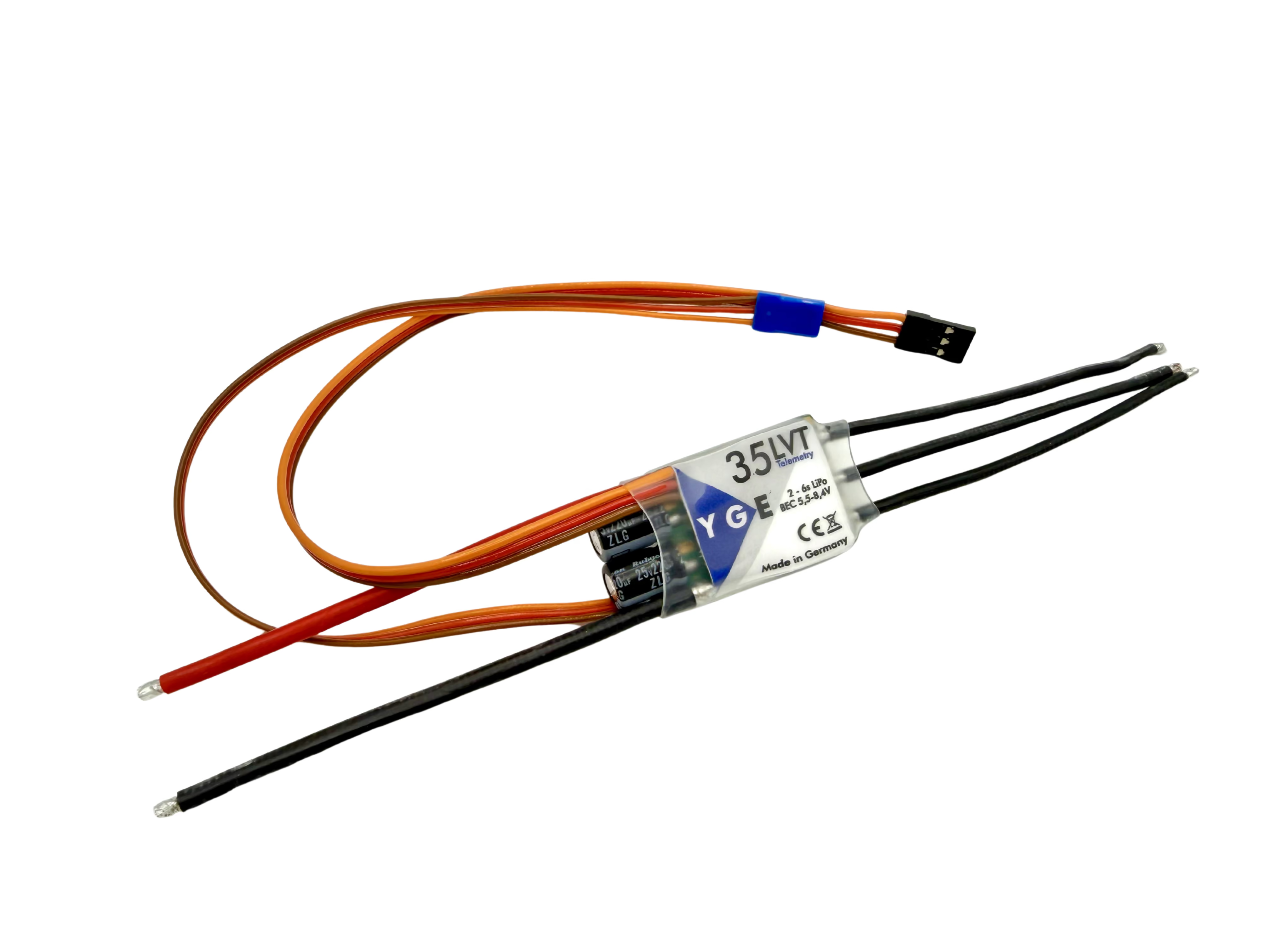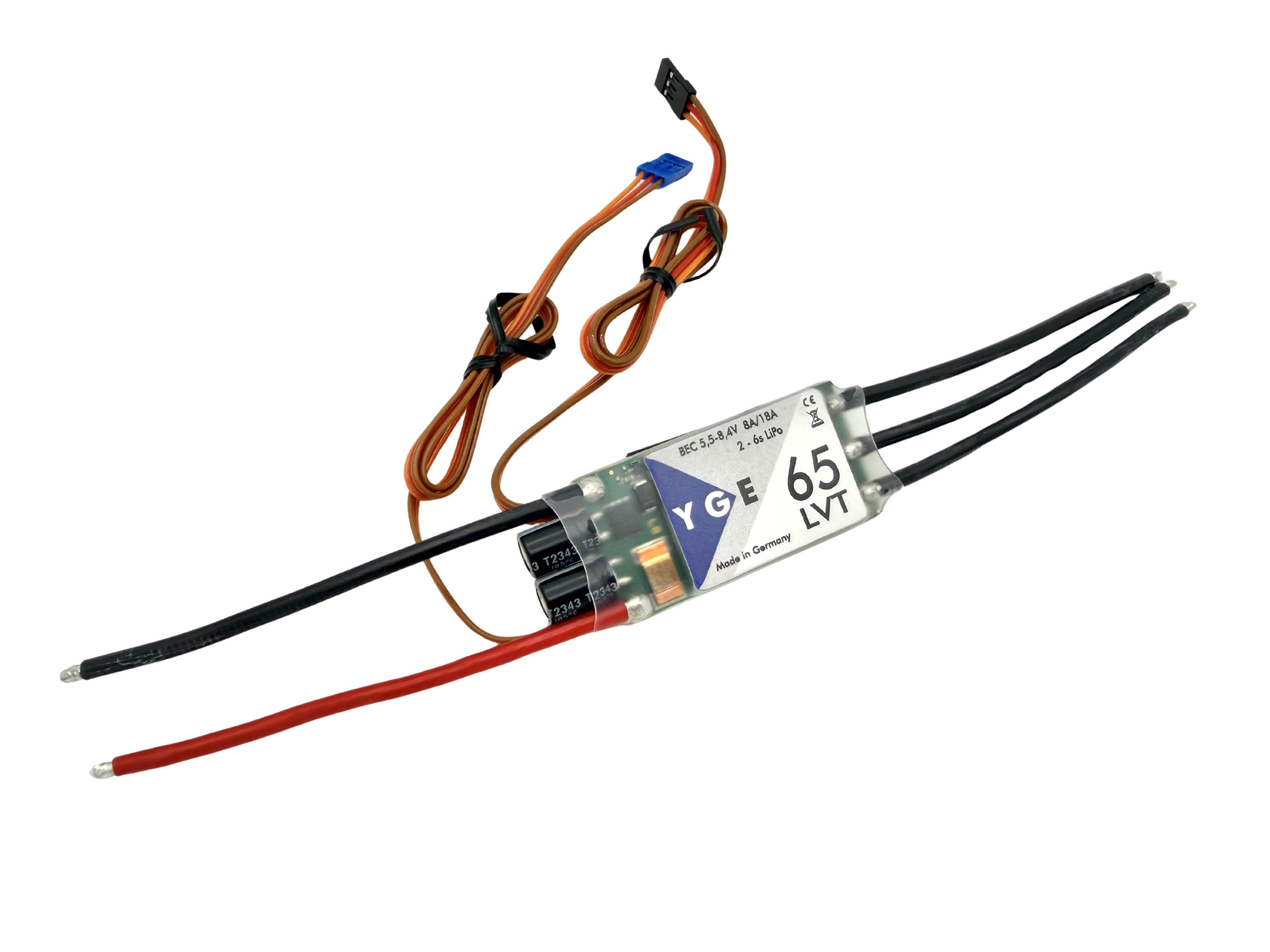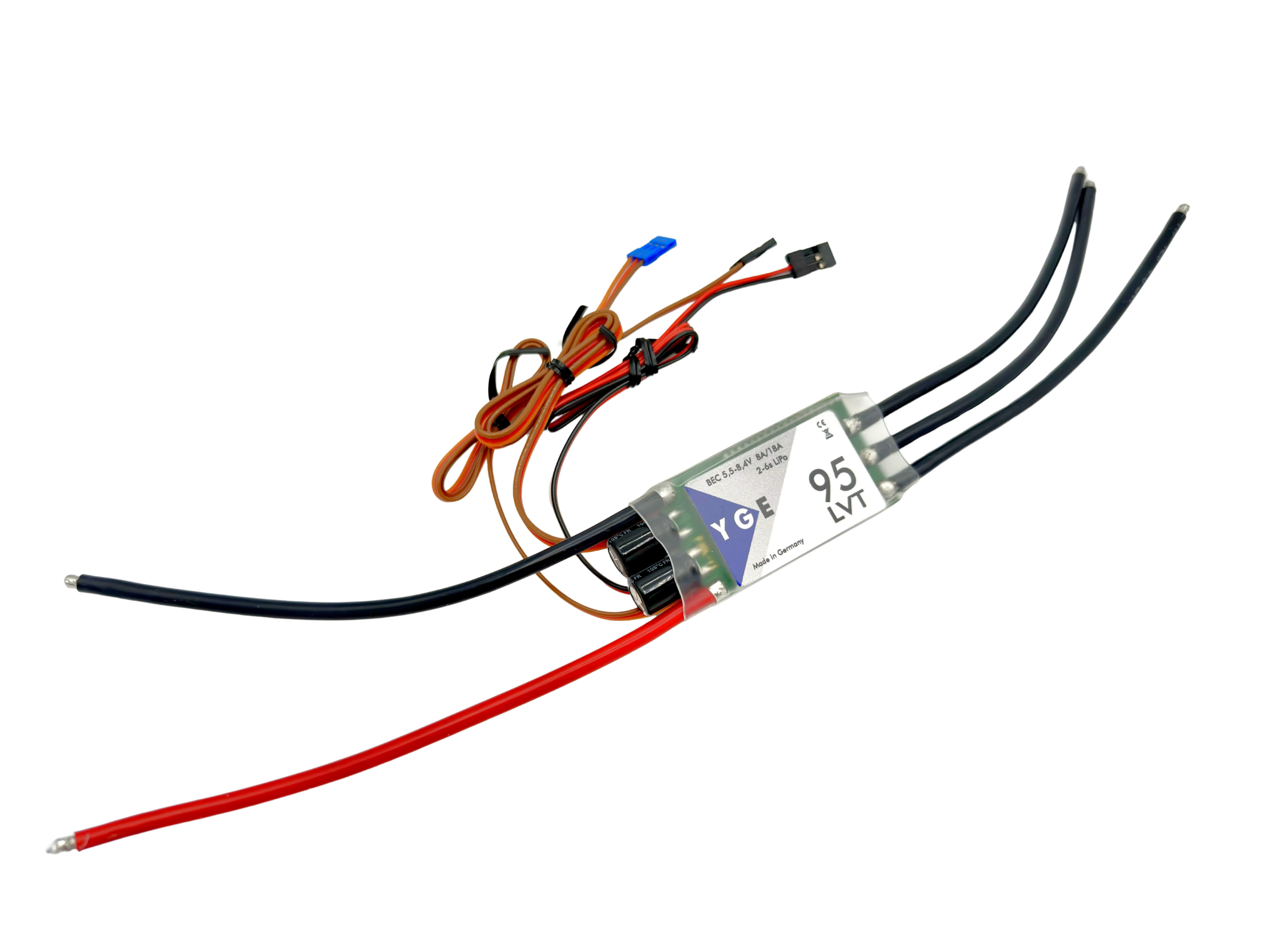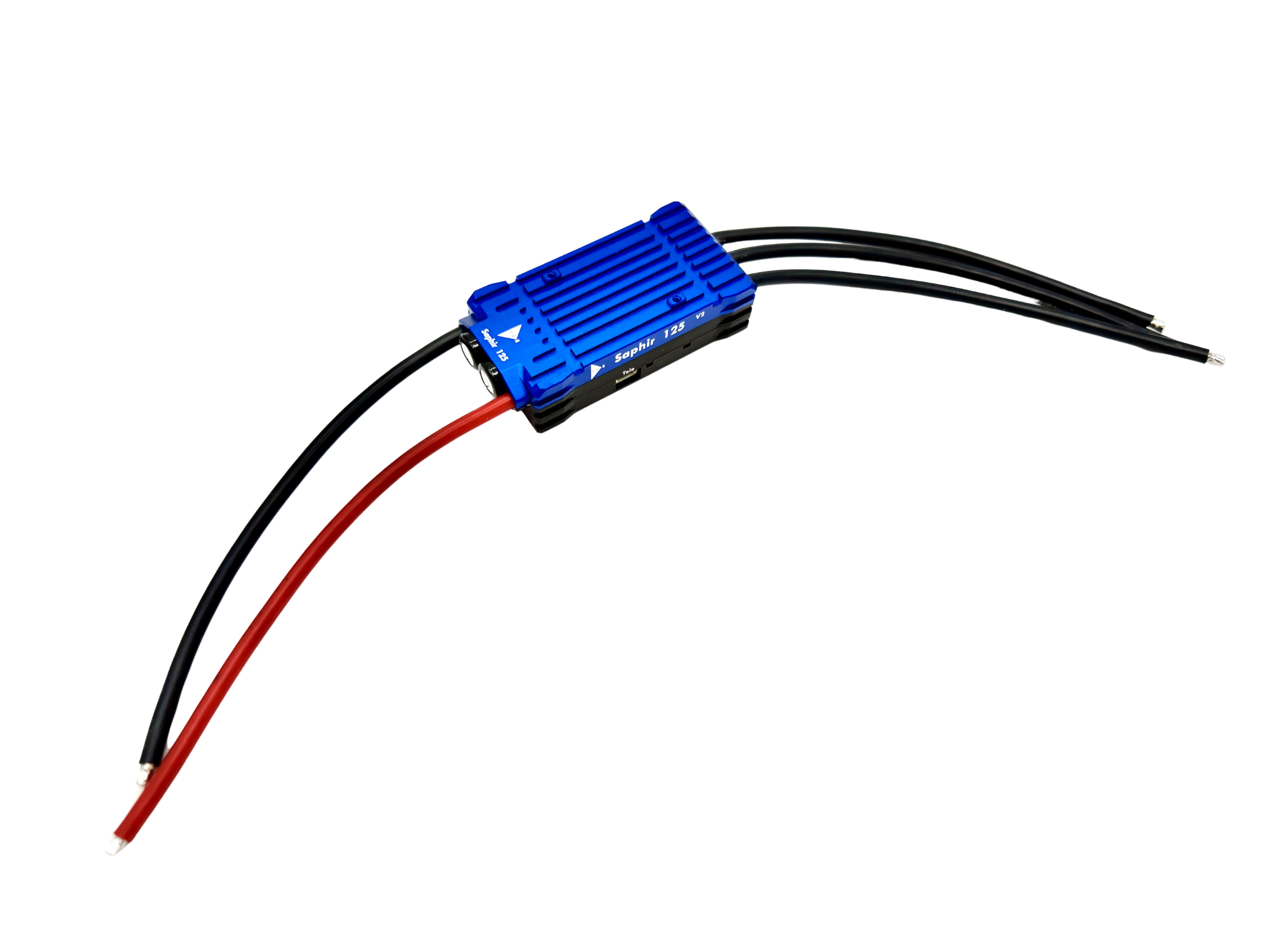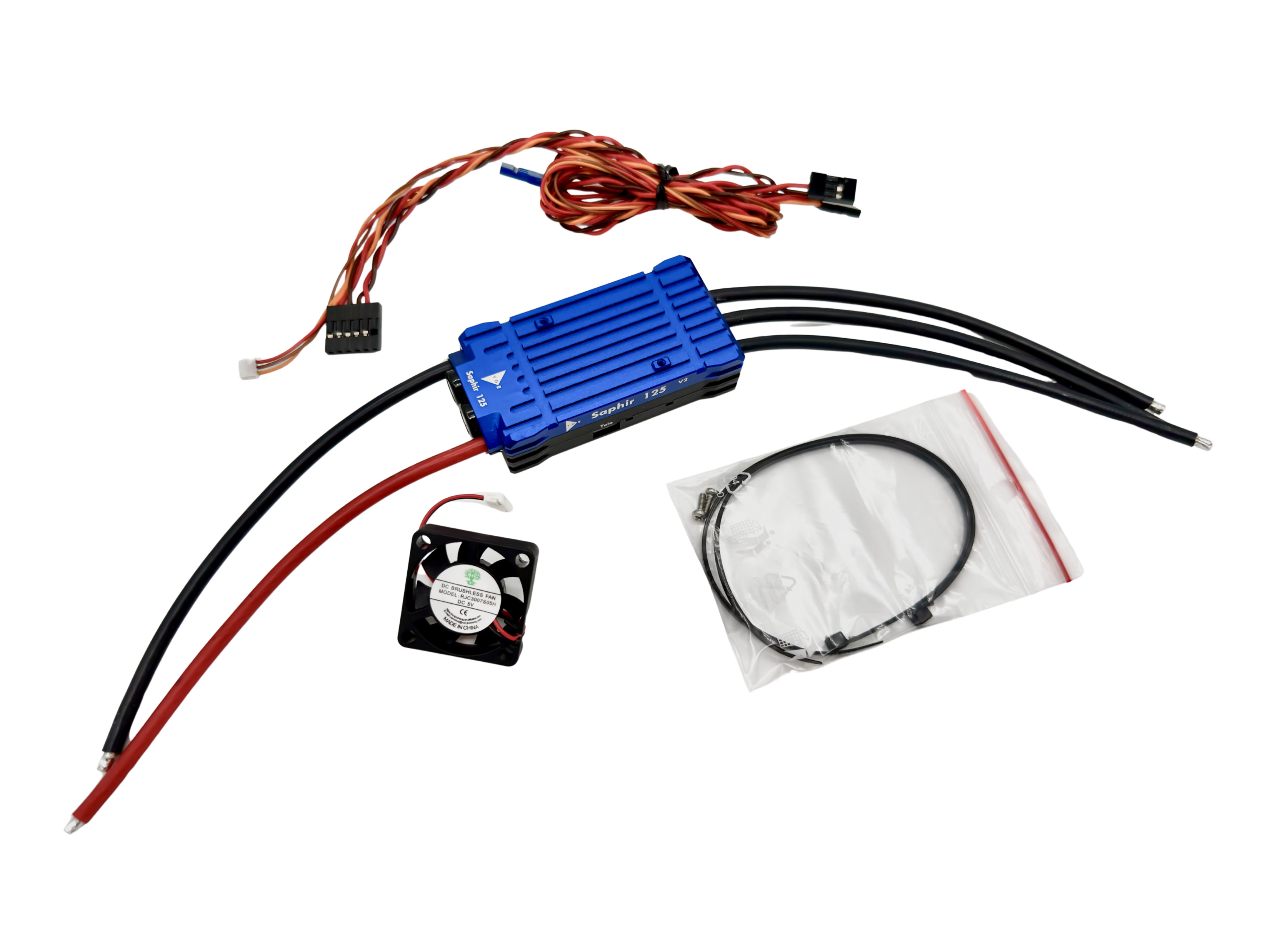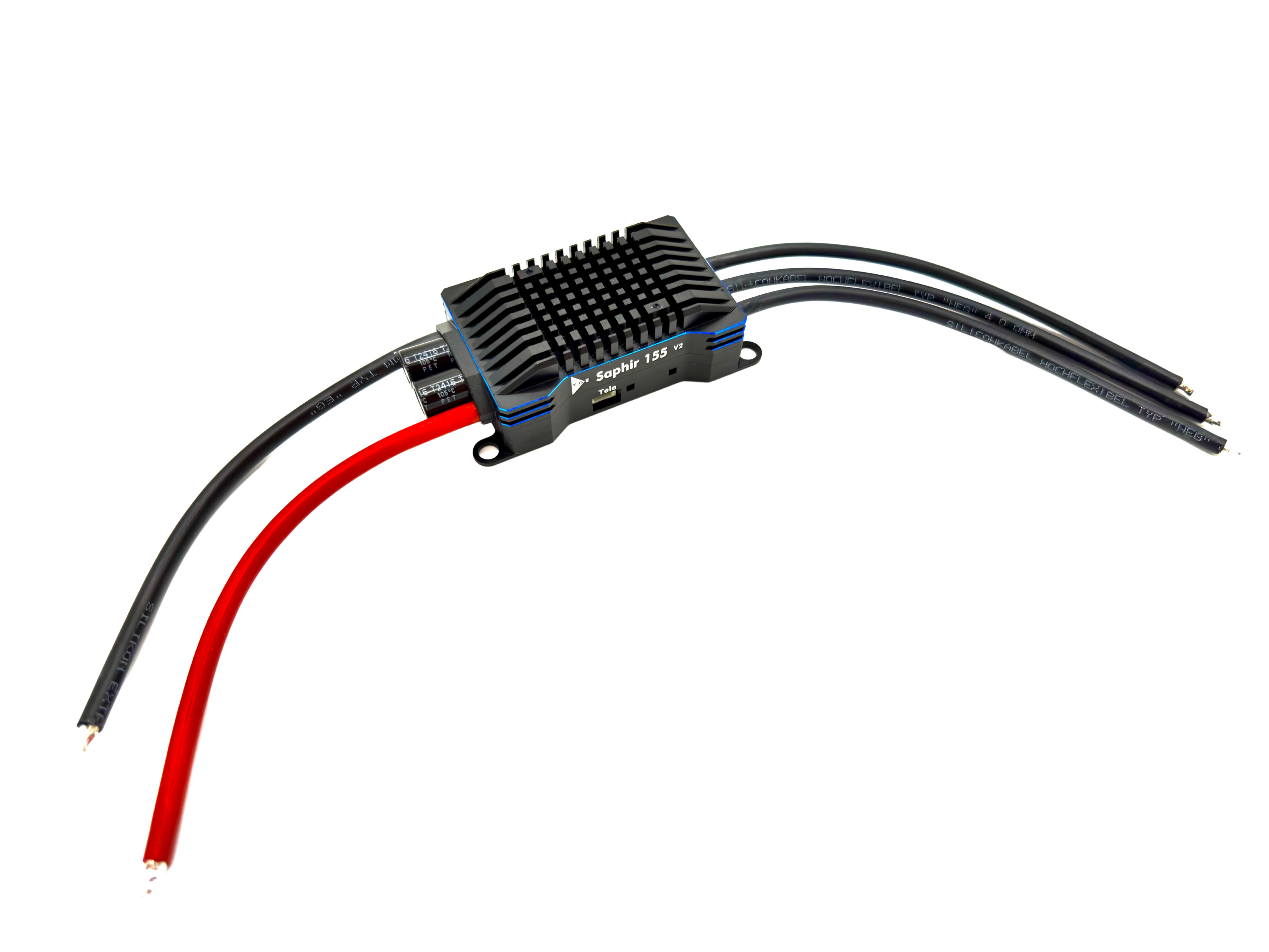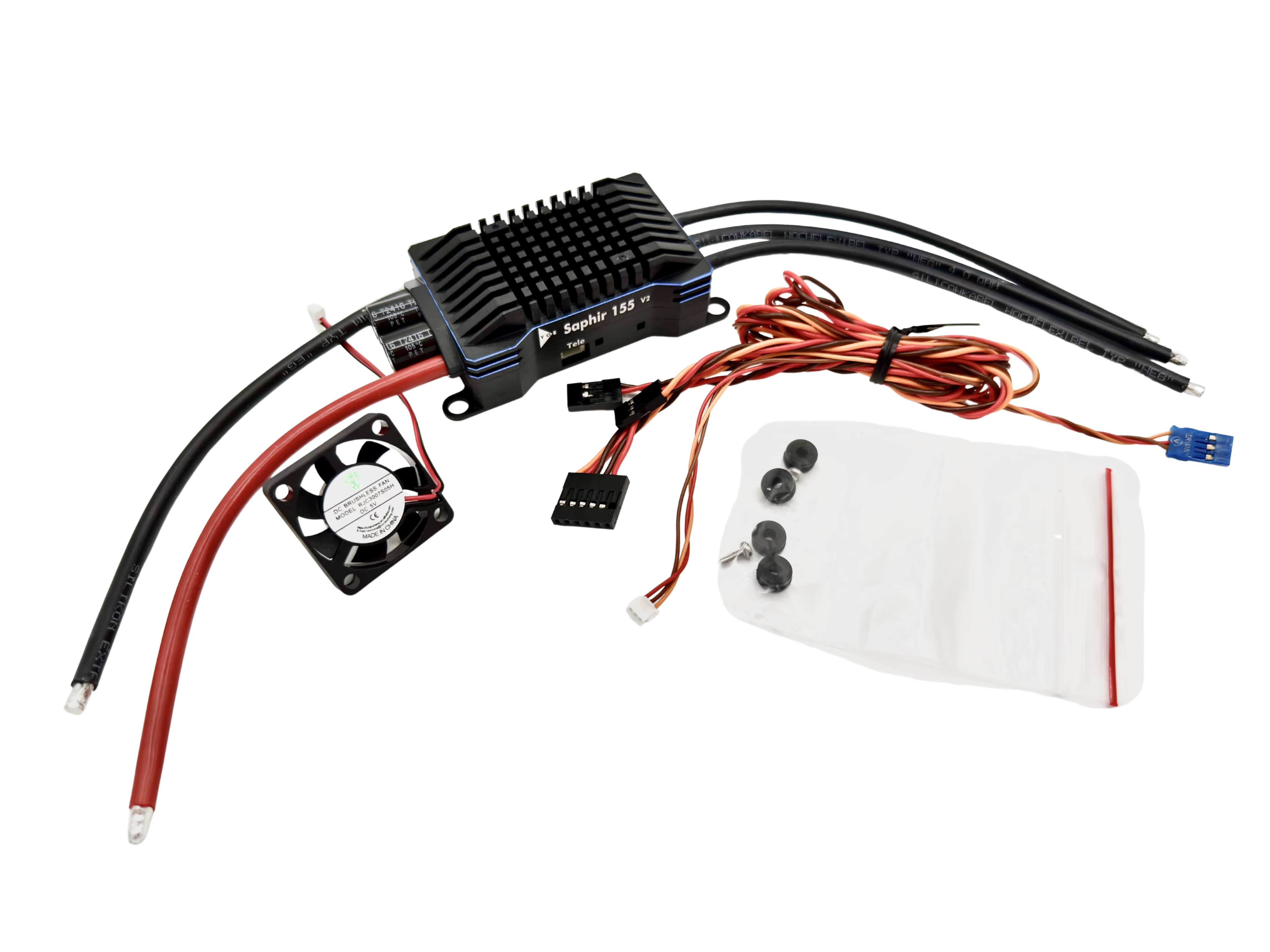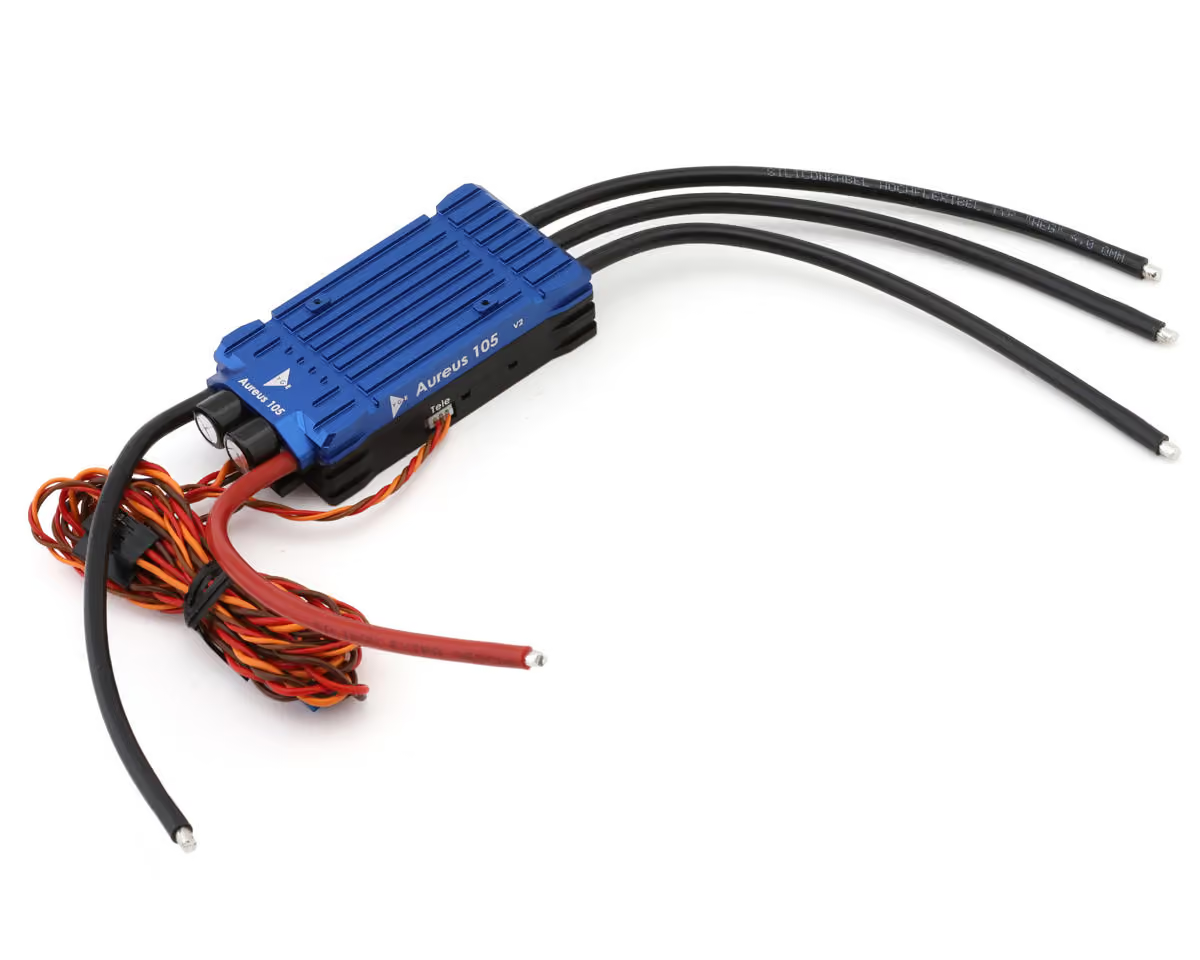

High Voltage Telemetrie (HVT)
In the context of brushless controllers, “high voltage” refers to the use of LiPo batteries up to 12s/14s/16s. In model making, “HV” (High Voltage) refers to operation in the high-voltage range, typically from 12s to 16s LiPo.
Technical Data
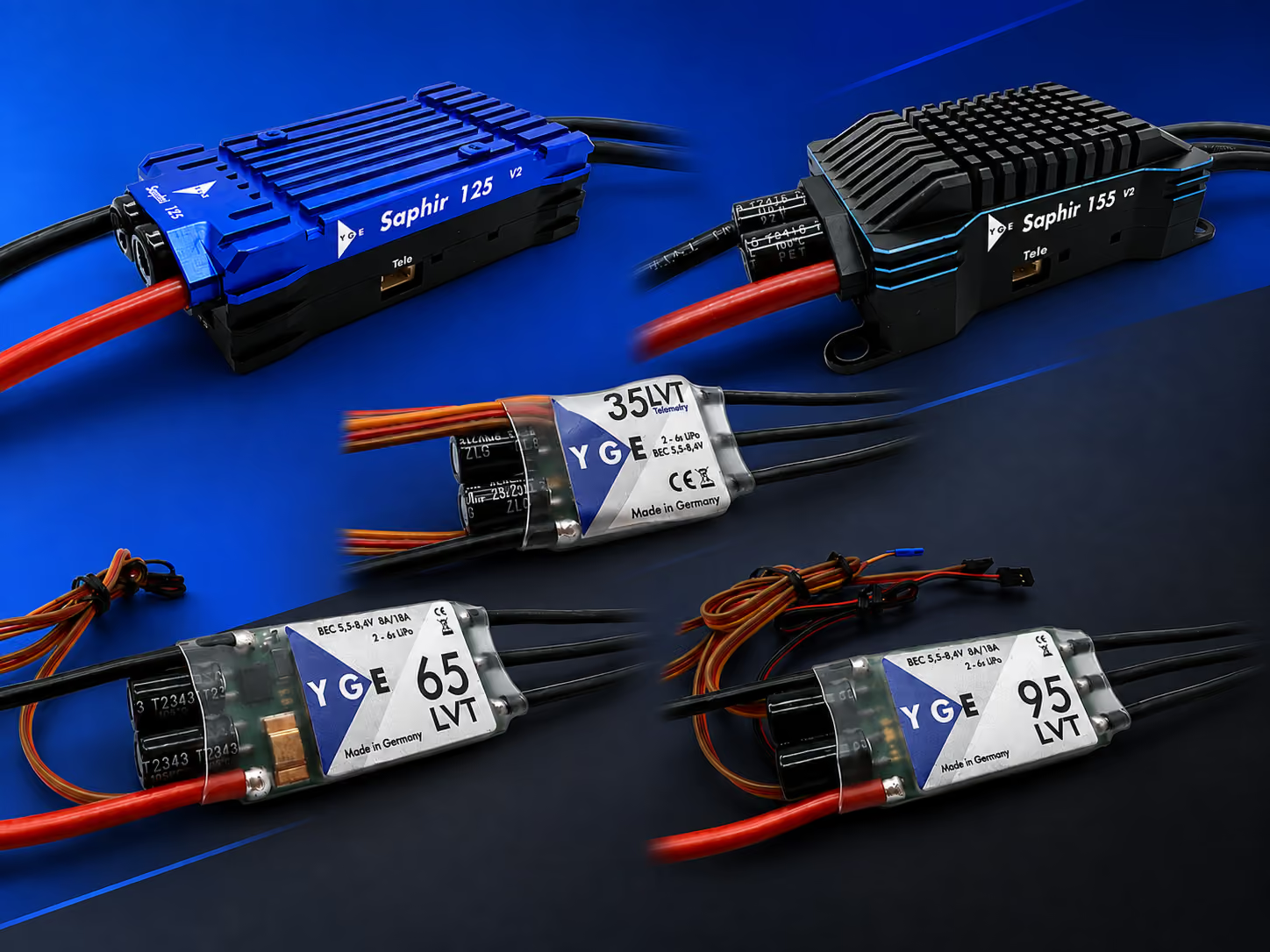
YGE HV controllers are characterized by high performance in a compact design. Thanks to their compatibility with all common remote control systems and telemetry systems, as well as their pre-programmed operating modes, they are versatile and suitable for a wide range of applications. All YGE controllers feature a 32-bit processor with high computing power.
To pre-program the controller for the specific application, we have created the mode programming function. Using the transmitter stick, all necessary parameters are preset according to the operating mode, and the throttle channel endpoints are also automatically read. The following modes are available:
Mode 1: External Governor;
Mode 2: Governor;
Mode 3: Governor Store;
Mode 4: Motor flight with brake (glider);
Mode 5: Motor flight without brake;
Mode 6: Motor flight with acro brake.
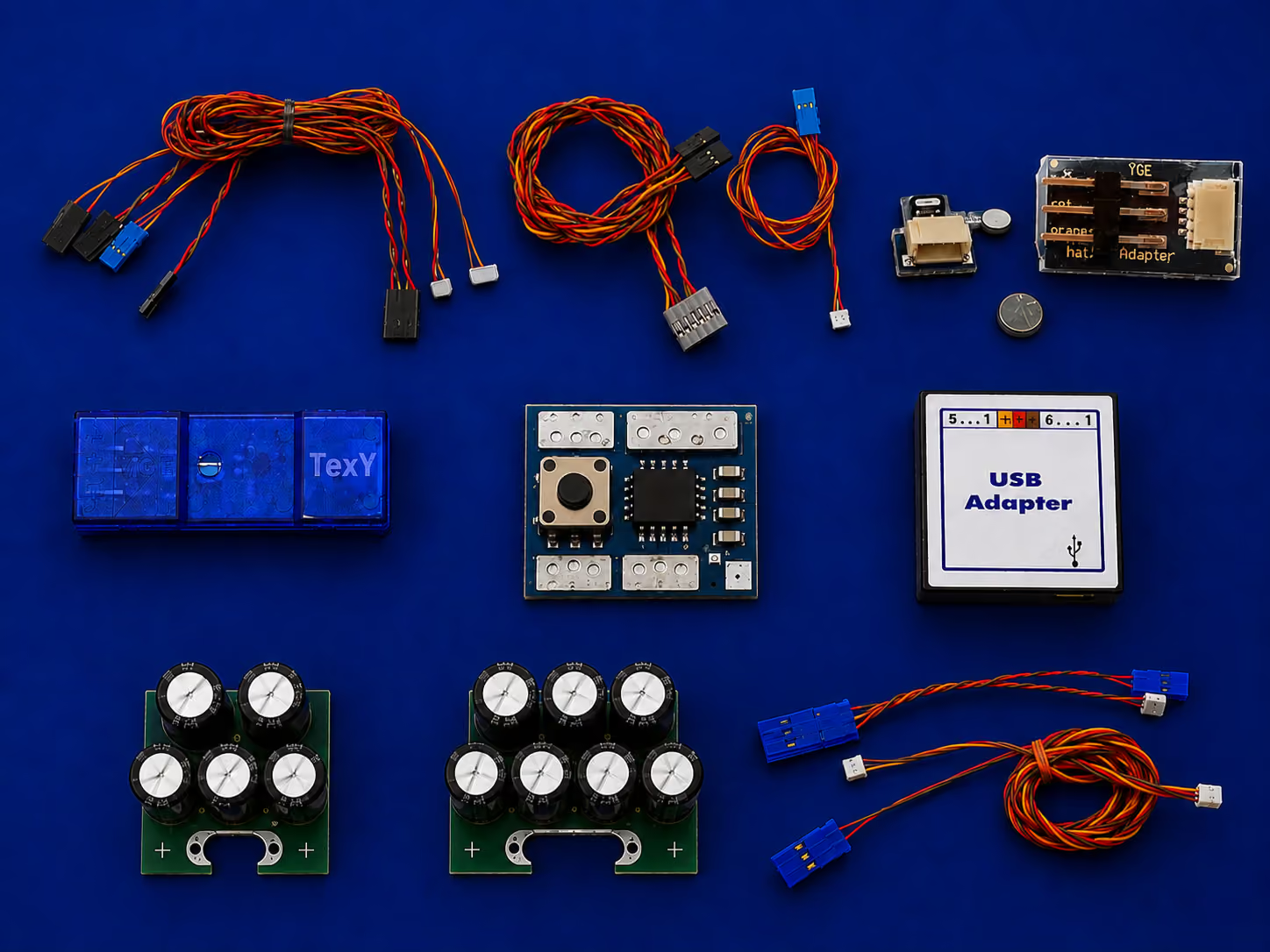
Mode programming is completed in no time, and the controller is then fully operational. For advanced programming and selecting the telemetry protocol, the USB adapter is required to connect to a PC.
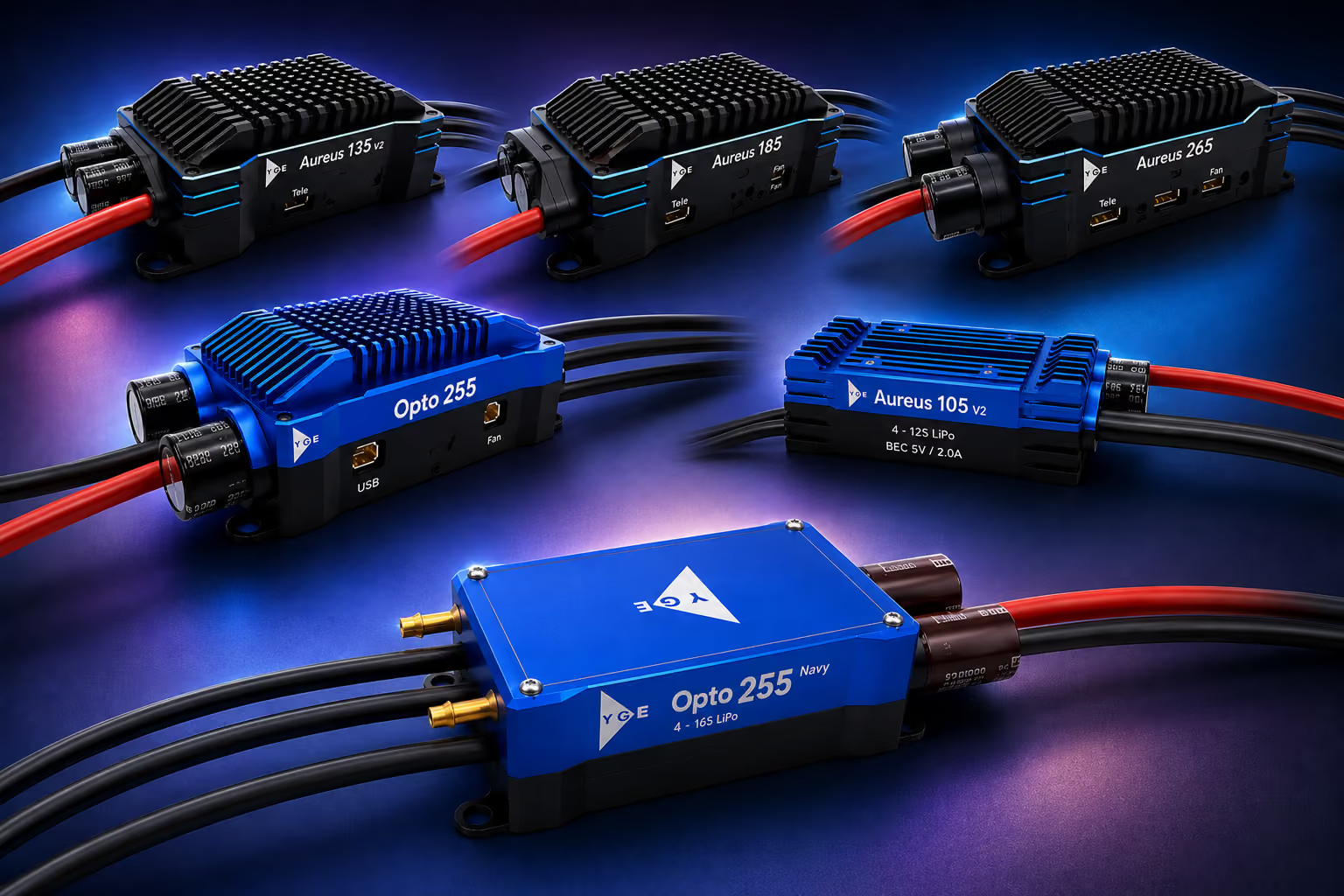
The YGE Aureus series features an adjustable high-performance BEC that meets even the most demanding requirements. The voltage is adjustable from 5.5V to 12V, and it includes all necessary protection mechanisms. At YGE, we have confidence in our BEC, so we naturally do not require our customers to use a buffer battery! Nevertheless, in many applications, using an additional safety measure makes sense. We did not simply install a diode in the BEC’s output to prevent reverse current from flowing into the BEC, as this has the drawback that the receiver voltage can overshoot when the servos are rapidly reversed. Furthermore, the voltage drop across a diode is load-dependent, which would result in a fluctuating BEC voltage. For this reason, we have developed a circuit (ideal diode) that is normally off and protects the BEC against reverse currents. However, should the receiver voltage overshoot due to reverse currents from the servos, this circuit opens for a fraction of a second and directs the excess energy back into the flight battery. This is not only safe and efficient, but it also provides an absolutely constant BEC voltage.
All of our controllers feature high-precision current measurement and current limiting. If this value is reached, the controller does not shut down, of course. It limits the power so that no more than the set maximum current can flow. This protects the controller from overload, and in the event of only a small peak, the flight can simply continue as normal—whereas other controllers would shut down or throttle back. This works so well, in fact, that current-controlled operation is possible!
The ESC outputs the following telemetry data: battery voltage, current, capacity, RPM, FET temperature, BEC temperature, BEC voltage, throttle preset, and ESC opening. Our Saphir and Aureus series also output the electrolytic capacitor temperature and the BEC current. Our entire product line is compatible with all common telemetry protocols:

The YGE TexY is required to use telemetry with Futaba, FrSky, Spektrum, and Core.
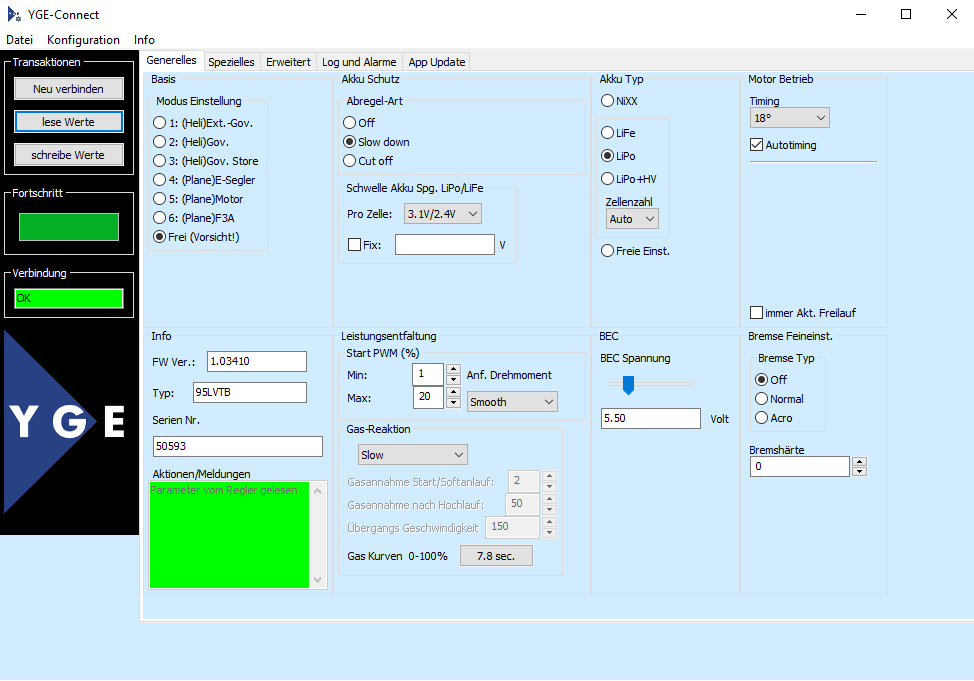
The YGE Connect software allows you to configure advanced settings on the ESC. Among other things, you can select the desired telemetry protocol, customize the startup process, or adjust the BEC voltage. It also displays logged data from the last flight, as well as any error messages. You can save the ESC setup or load different setups. Of course, you can also update the ESC online to ensure it’s always up to date. You can download the YGE Connect software here.
Another unique feature is the ability to configure parameters directly in the transmitter (Vbar Control, Graupner, Jeti, Powerbox, Rotorflight). This allows you to conveniently adjust the most important parameters directly on the transmitter. It couldn't be simpler!
> Initial configuration via YGE Connect required!
With Mikado VBC and VBC Touch, you don't even need to program a mode or select a telemetry protocol! All YGE ESCs have auto-detect and automatically recognize the connection with VBC and NEO. Afterward, you can set all common parameters directly in the transmitter. YGE telemetry works perfectly with the Vbar Control's battery management system! Check out our explanatory video for more information !
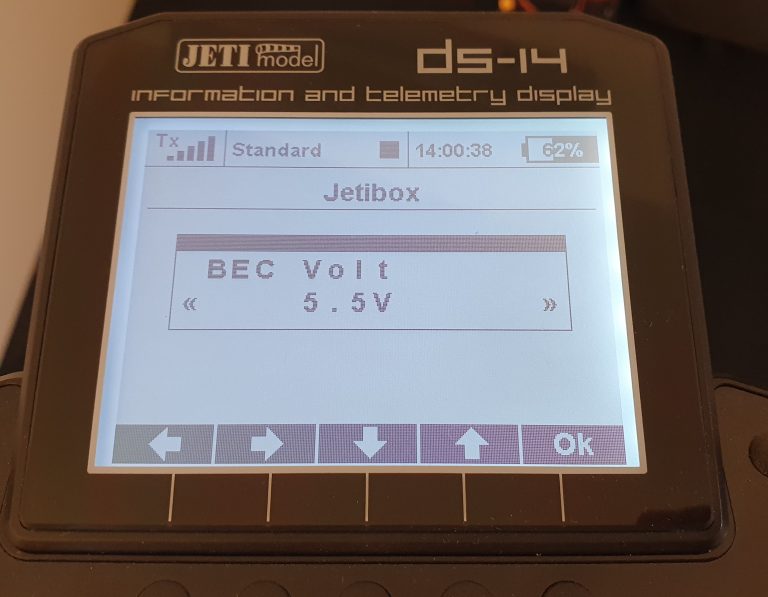
Jeti ExBus: The Jeti transmitter allows you to adjust the most important controller parameters directly on the transmitter. This makes it easy to adjust individual controller settings right at the airfield. You can find the controller settings in the JetiBox menu under “Mx.”*
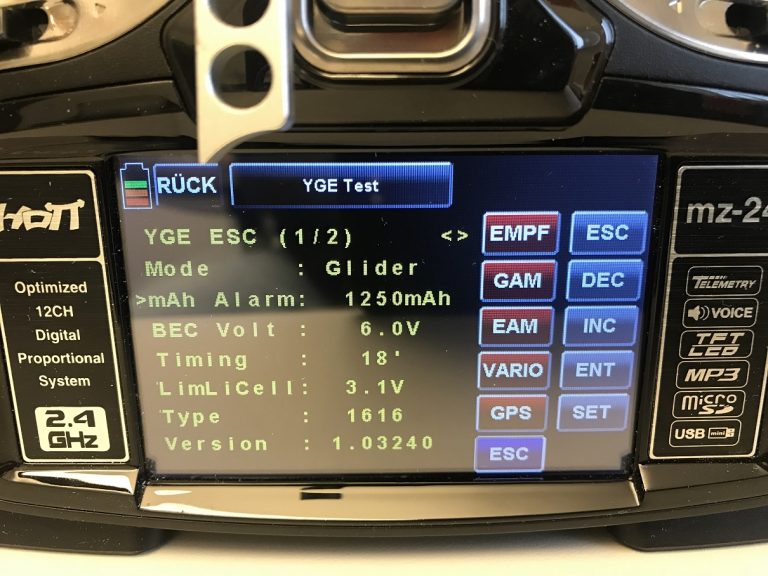
Graupner HoTT: The most important controller parameters can also be adjusted via the telemetry menu on the Graupner transmitter. Here you’ll find settings for timing and BEC voltage, among other things, and you can also adjust the start-up time.*
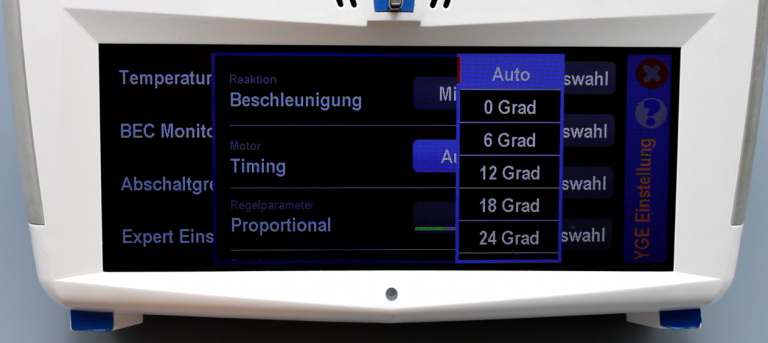
Powerbox CORE: Here, too, all standard controller parameters can be adjusted directly on the transmitter. This requires the use of the YGE TexY.*
You must select the telemetry protocol once in the PC software. A separate USB adapter is required.
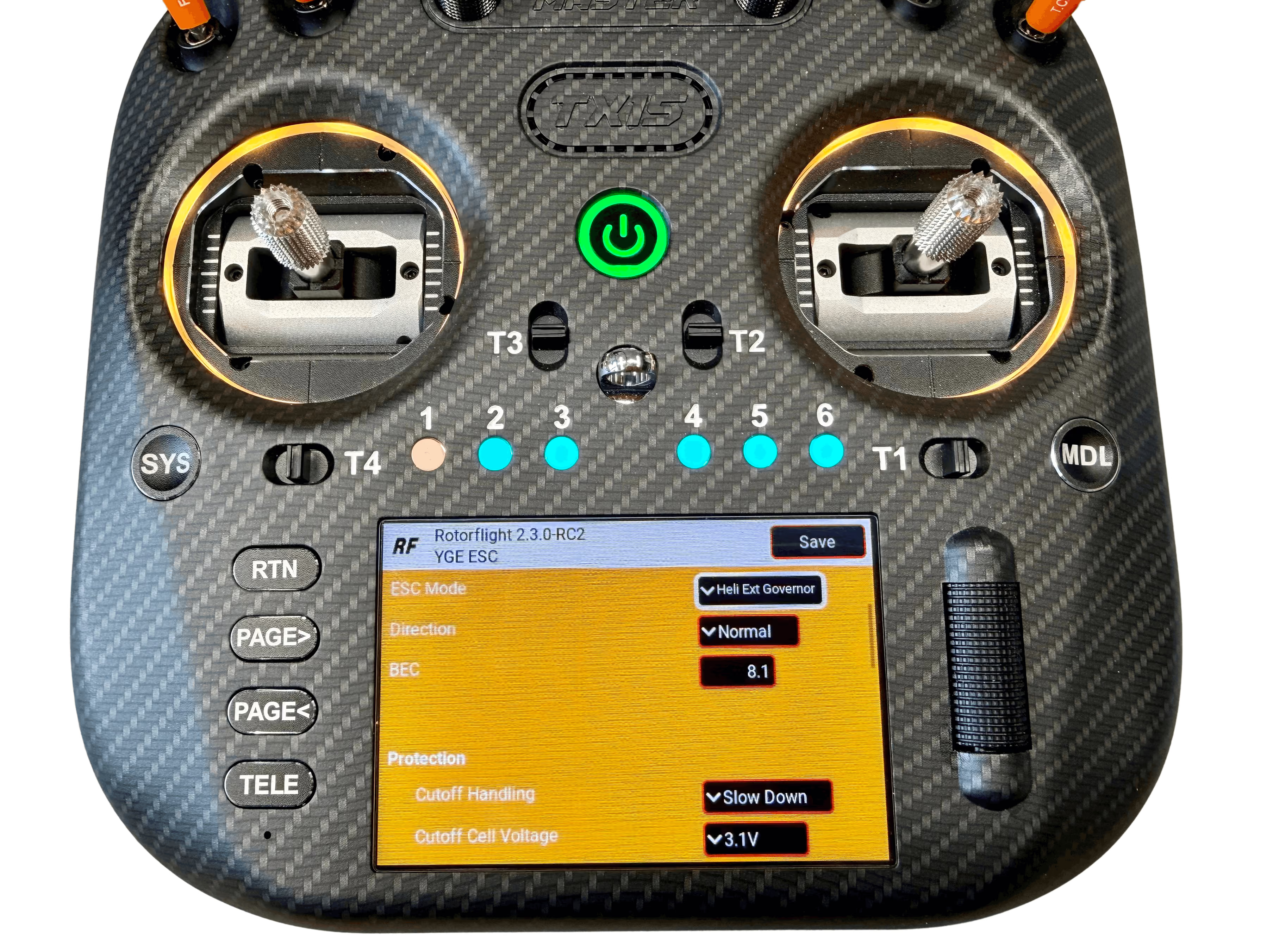
Rotorflight: All ESC parameters can be adjusted and saved via the Rotorflight Lua script or RFSuite (for EdgeTX or ETHOS operating systems).
Spirit Wave: All settings are adjustable via the Spirit Wave model menu. Important note! A special adapter is required for telemetry output and programming. See also: https://manual.spirit-system.com/index.php/YGE_Telemetry All ESC parameters can be adjusted and saved via the Rotorflight Lua script or RFSuite (for EdgeTX or ETHOS operating systems).
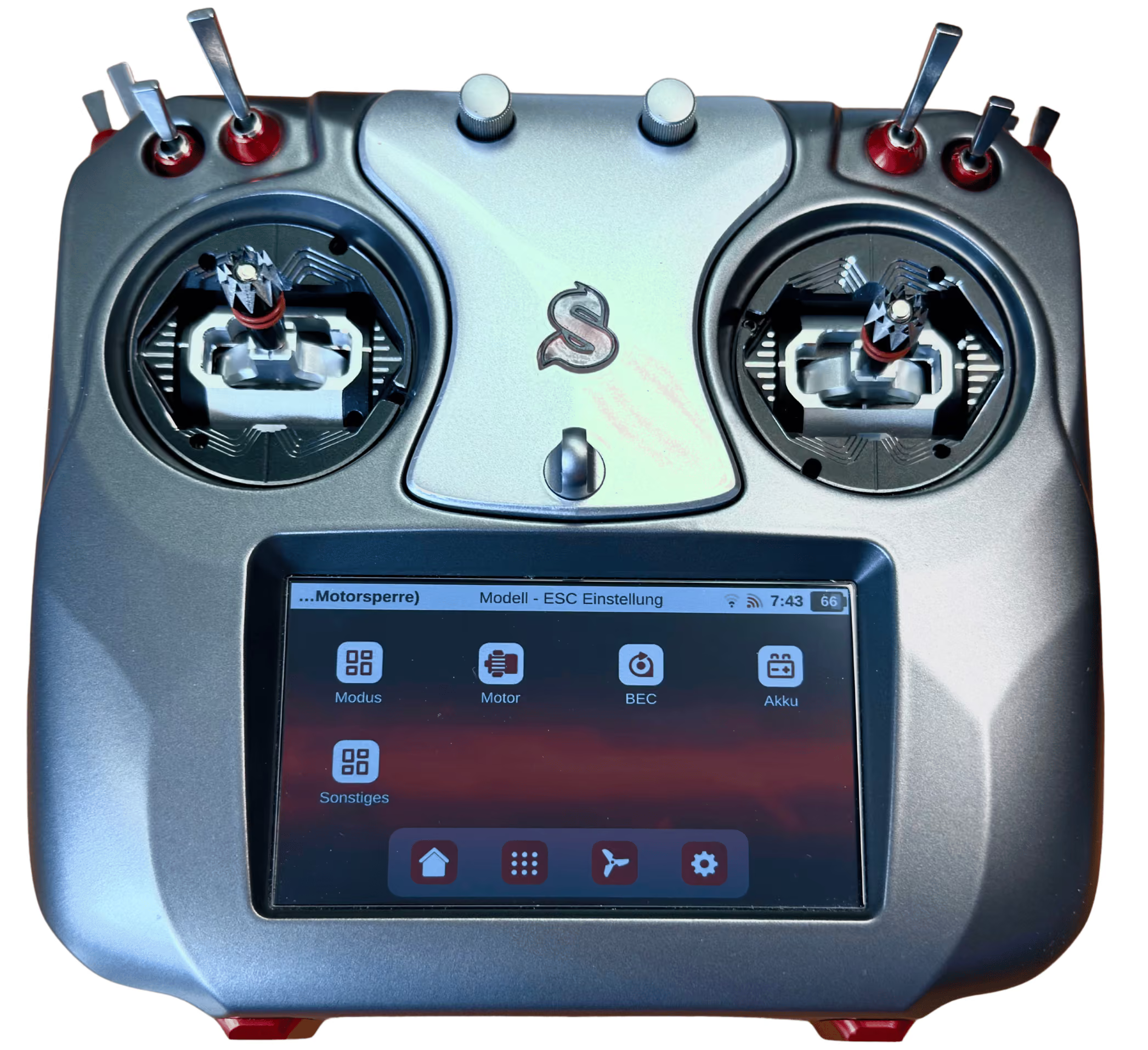
With 25 years of experience in model aircraft speed controllers, we have developed a robust and perfectly tuned cooling concept. This allows YGE controllers to run significantly cooler and operate more efficiently.
If things do get a little hotter, all controllers feature multi-stage, intelligent temperature management:
80°C: A warning is issued via telemetry. An entry is made in the log.
90°C: The current RPM is reduced by 25%. This is noticeable in flight, but a safe landing is still possible.
100°C: The current RPM is reduced by another 25%.
107°C: The controller shuts off the motor for safety reasons.

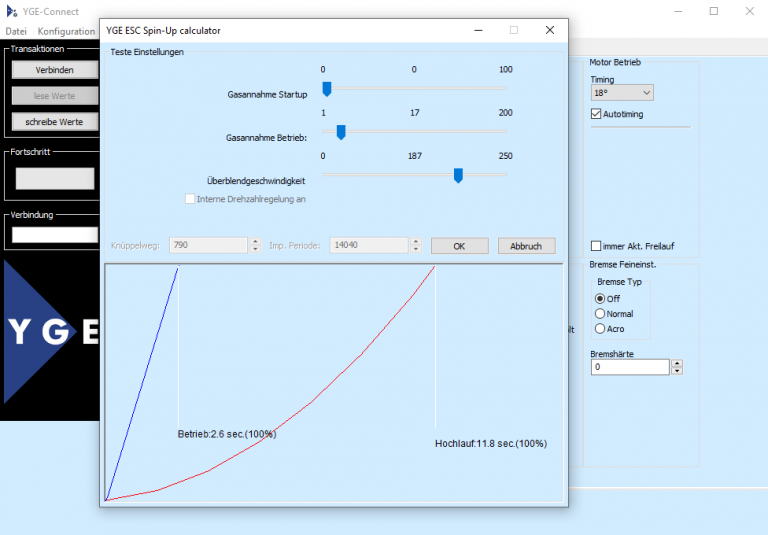
It should be smooth yet powerful! There are different requirements for takeoff. In fixed-wing models, it should be nice and explosive and crisp; in scale helicopters, it should start spinning as slowly as possible, almost in slow motion. Our controllers offer the right setting for every application! For the most common applications, the default setting from the selected mode is sufficient. If adjustments are needed, you can choose from 3 preset startup profiles (Slow/Middle/Fast). There’s also a “Custom” option that lets you tailor the startup to your specific needs using a graphically displayed ramp curve. When starting up from a standstill, you can also choose between a smooth sine-wave ramp-up and a rapid block ramp-up. For scale helicopters, the ramp-up time can also be set to >60 seconds. The response speed to changes in throttle input (switching between idle settings) can, of course, be adjusted separately.
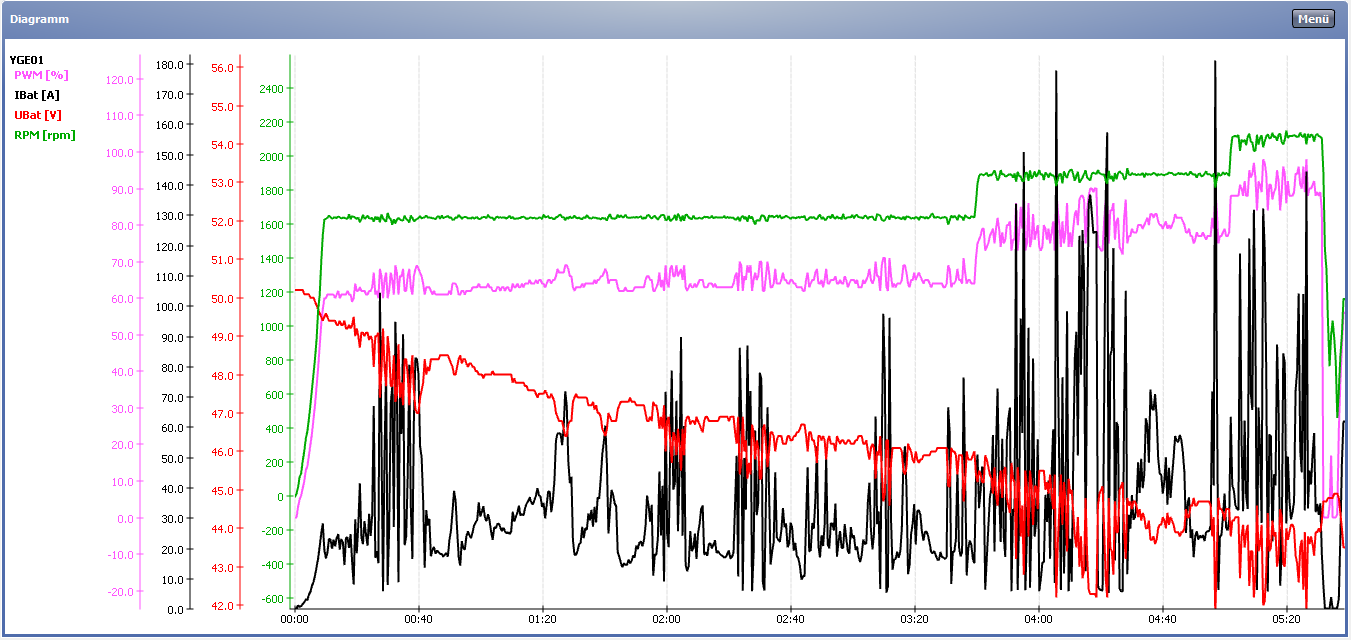
The YGE Governor offers exactly what makes a perfect governor. On the one hand, it’s designed to compensate for the battery voltage drop during flight, ensuring a consistent rotor head speed throughout the entire flight; on the other hand, it’s designed to compensate for speed drops caused by load spikes. Thanks to our many years of experience in model aviation, we’ve developed an optimal default setting that delivers perfect flight performance for all common setups without requiring any test flights or adjustments. In addition, all controllers feature our patented Governor Store mode, in which a reference RPM is entered once and permanently stored. This means that no matter how good or bad the various batteries used are, the ESC will always achieve exactly the same desired speed. For use with an external speed controller, such as the Vstabi-Governor, all YGE ESCs also feature a speed output.
In Mode 4 (powered flight with brakes), the throttle response is automatically adjusted for brake use, and the brakes are activated. Brake stiffness can be fine-tuned using the YGE Connect software. In Mode 6, the adjustable acro brake (F3A) is activated. An explanatory video about the F3A brake can be found here.
Autorotation isn’t just a 3D maneuver that wows audiences during air shows. It’s also crucial to master autorotation in emergency situations, which is why it’s all the more important to practice it occasionally. The bailout function plays a key role here, because if an autorotation drill doesn’t go as planned, you can turn the motor back on, and the controller will quickly bring the throttle back up to the target RPM without triggering a soft start.
To ensure your controller is always up-to-date and can take advantage of future new features, you can update it online via the USB adapter on your PC. For copy protection, each controller has its own unique serial number, and each update is generated individually for that serial number. Watch our explanatory video for more information !
High Voltage Controllers
Designed for high-performance electric aircraft and demanding applications requiring maximum current handling, intelligent thermal management and advanced telemetry integration.
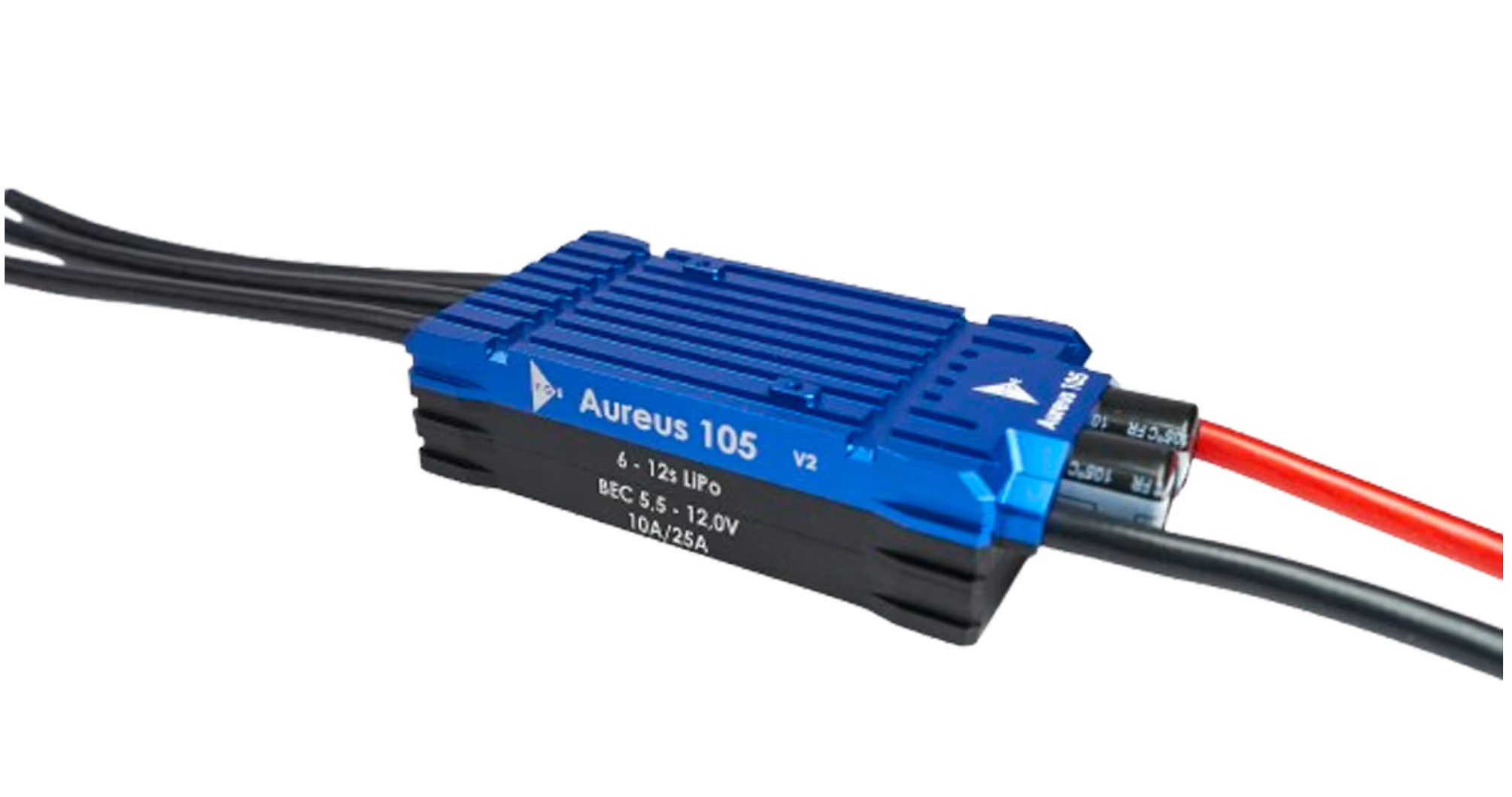
Aureus 105 V2
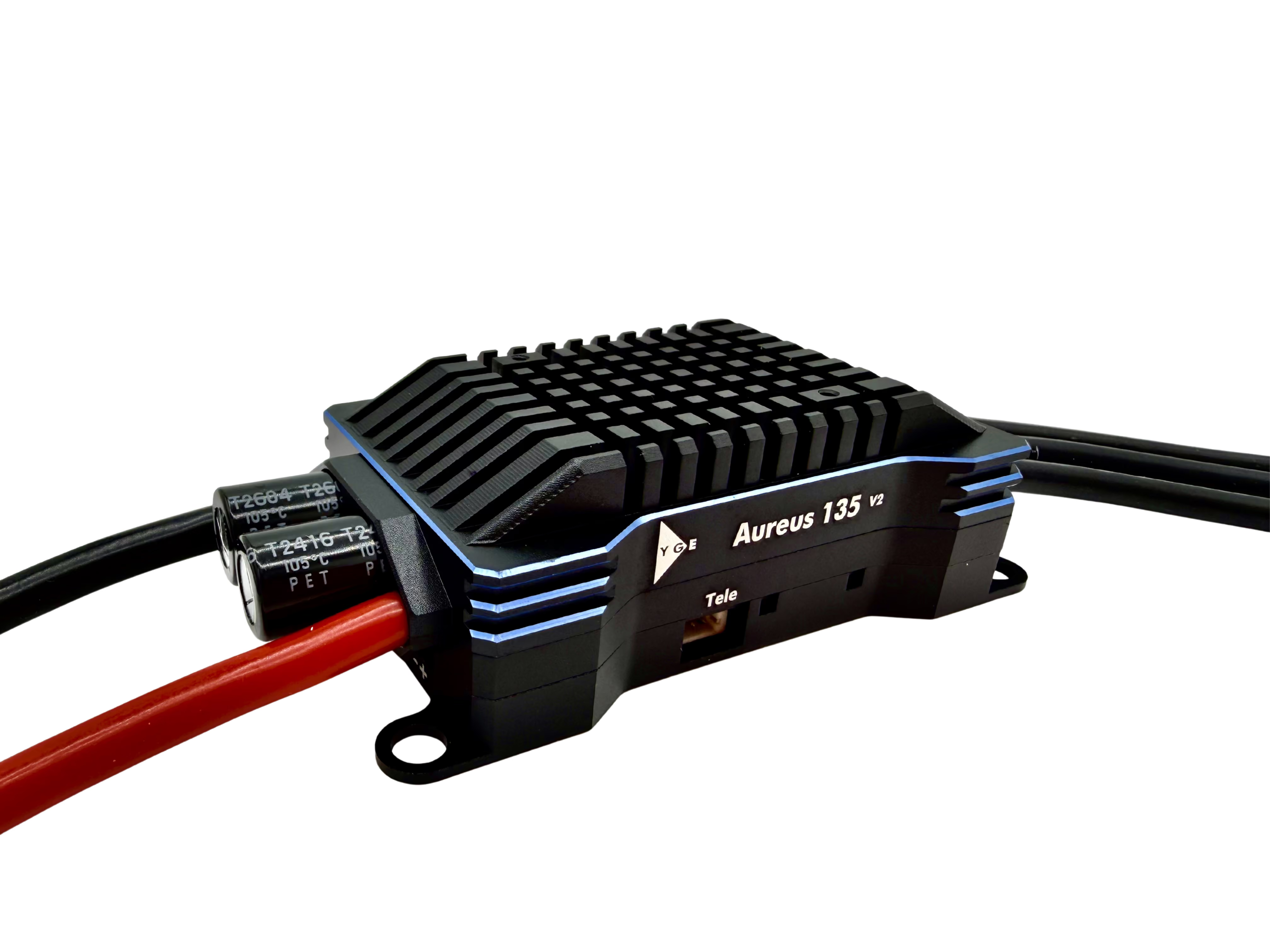
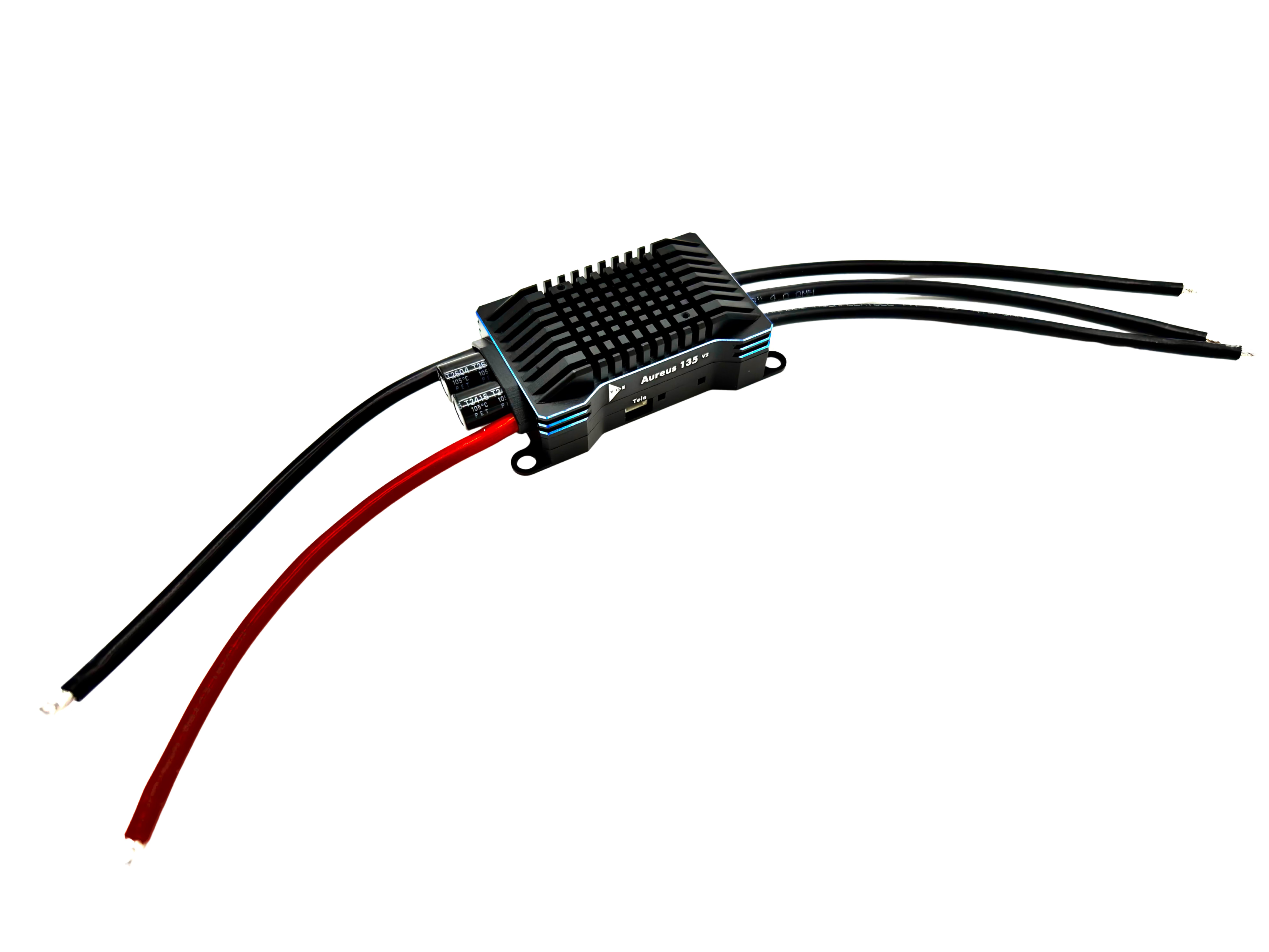
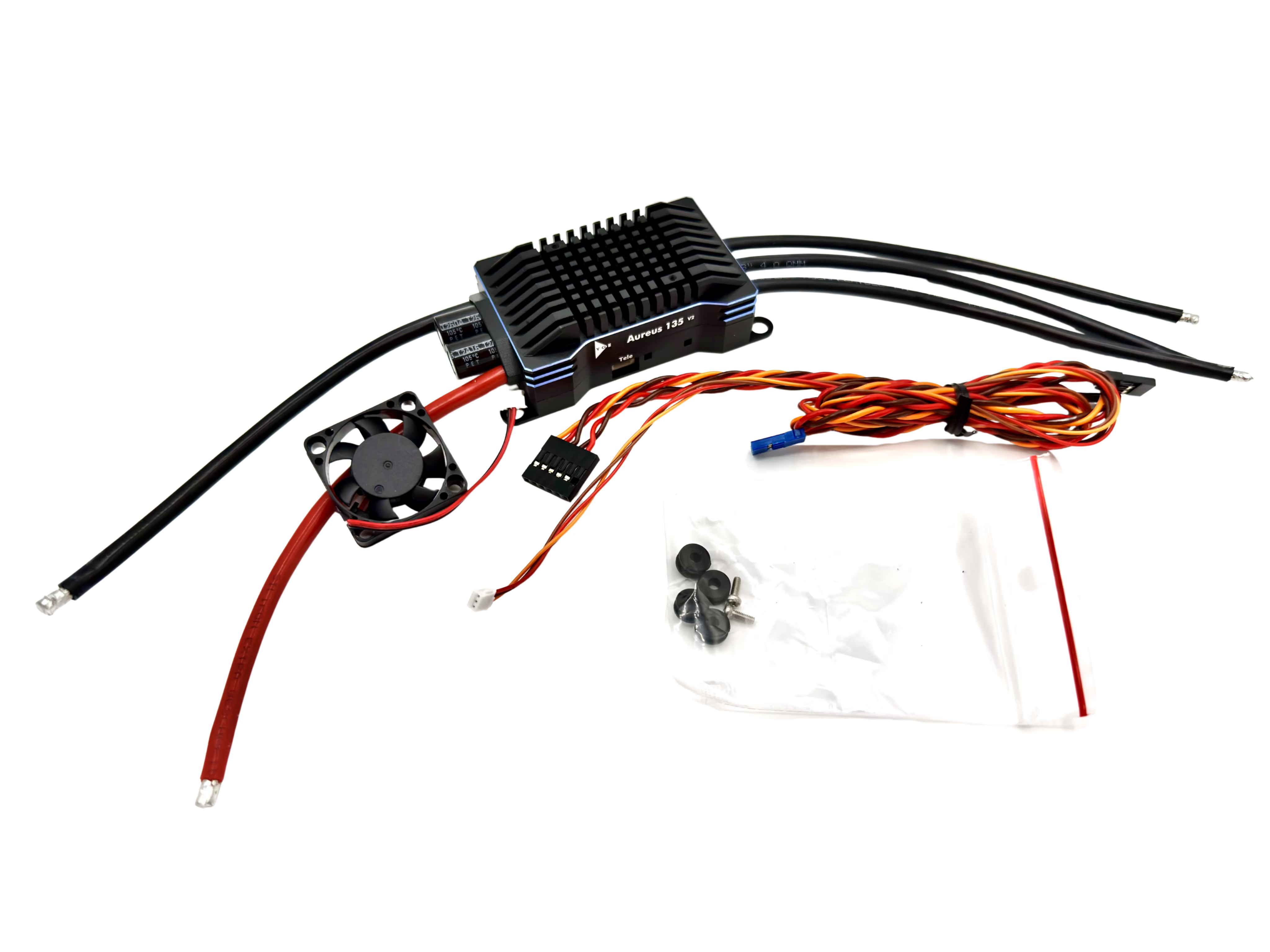
Aureus 135 V2
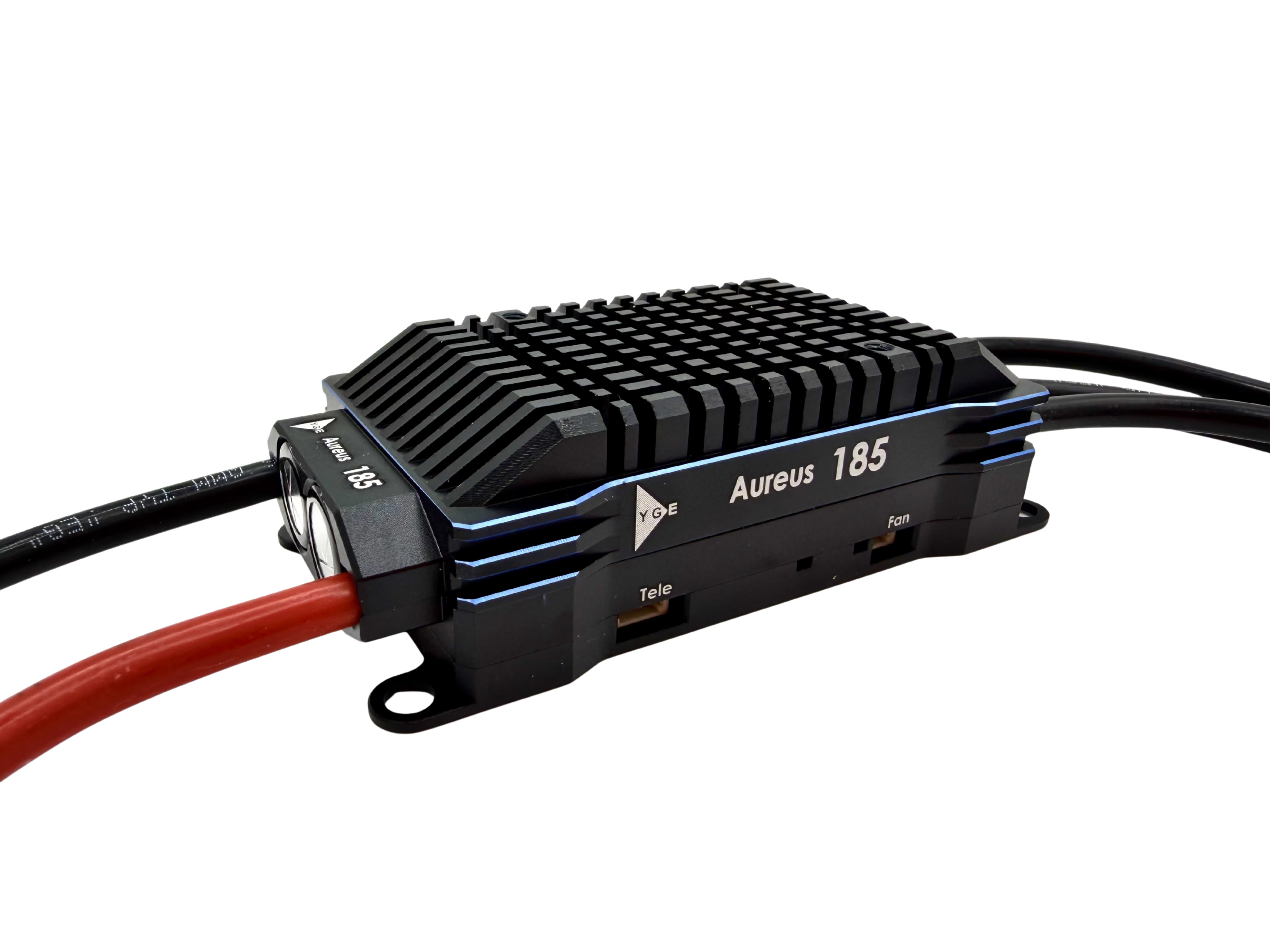
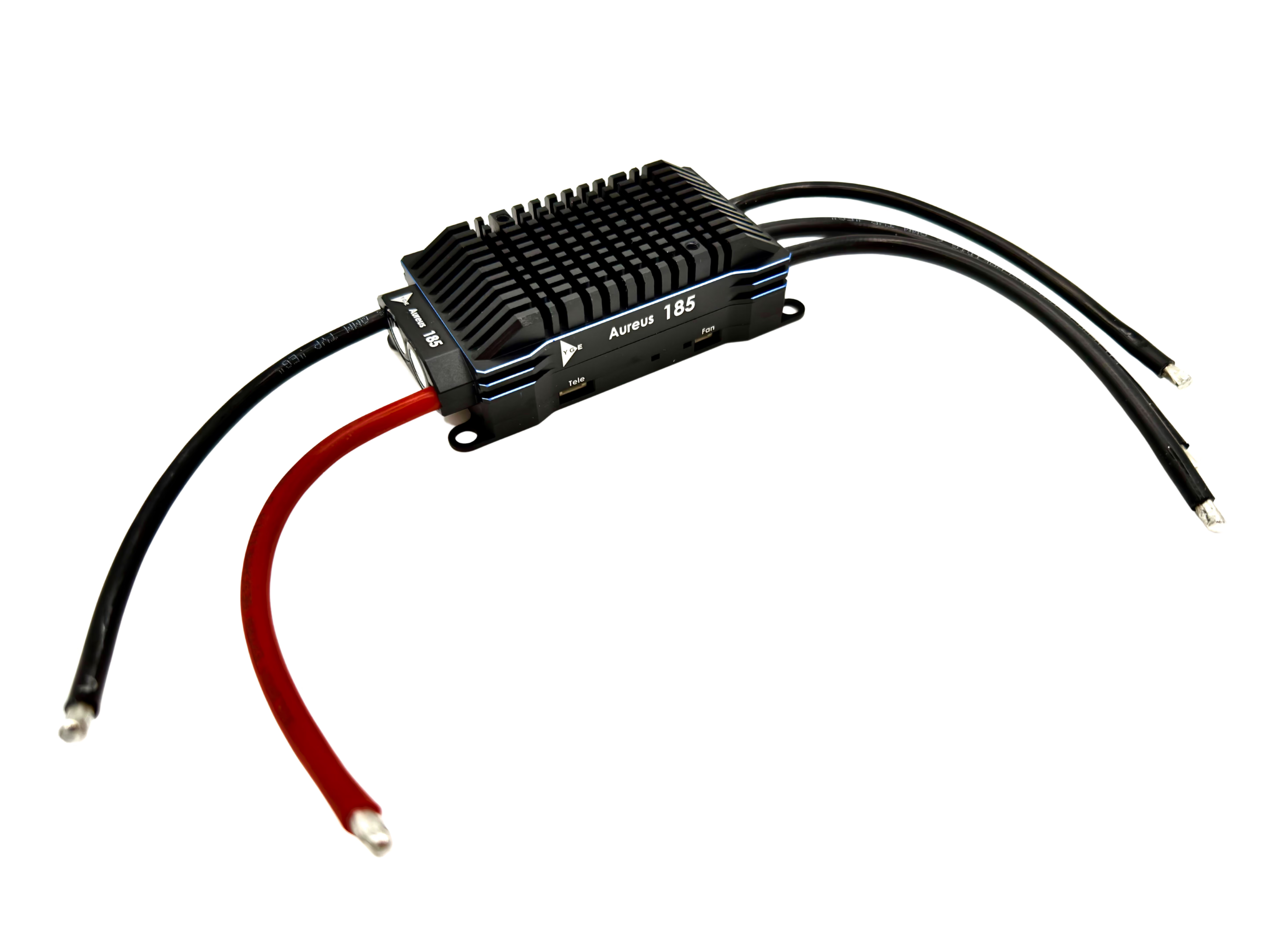
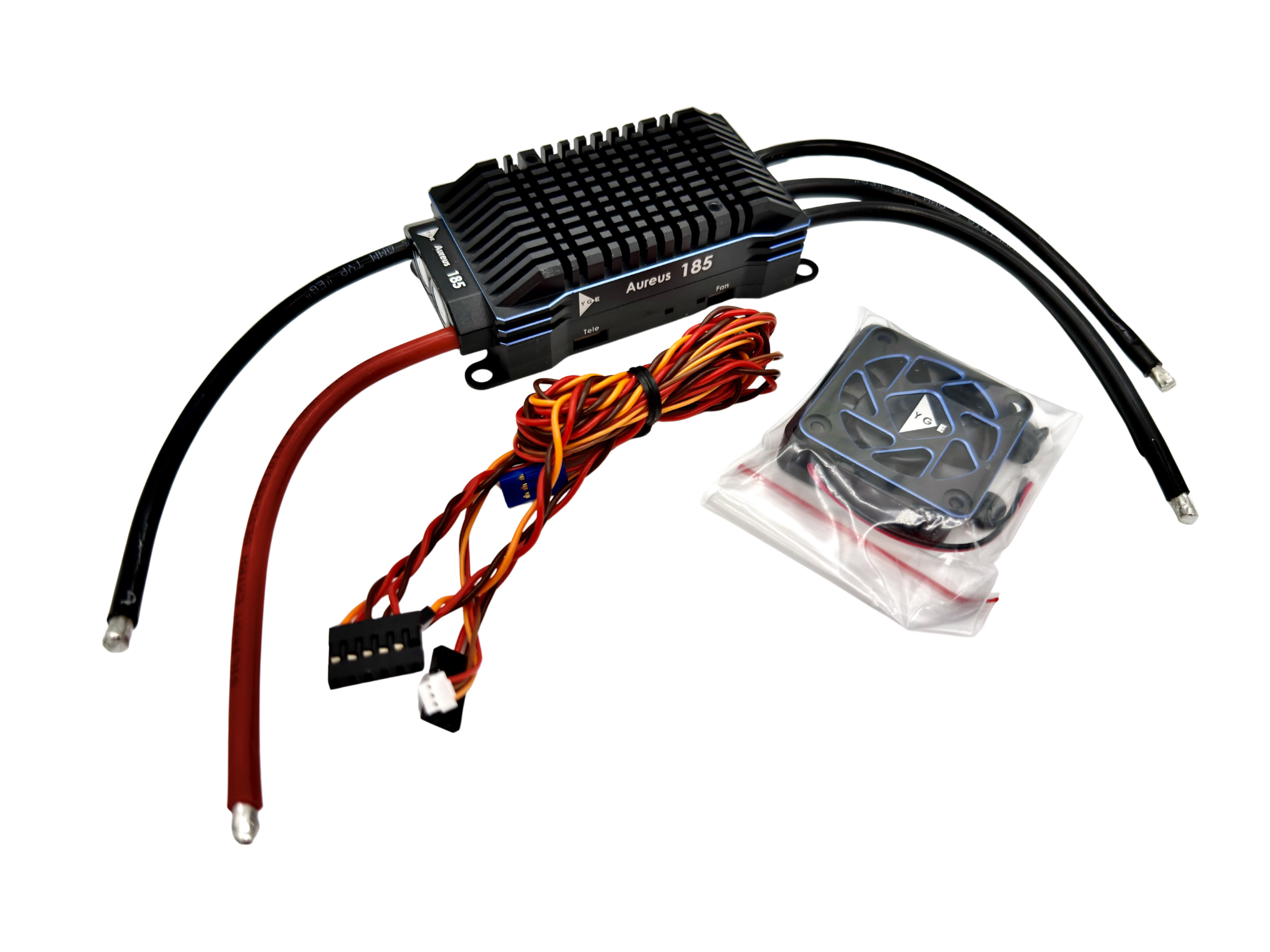
Aureus 185
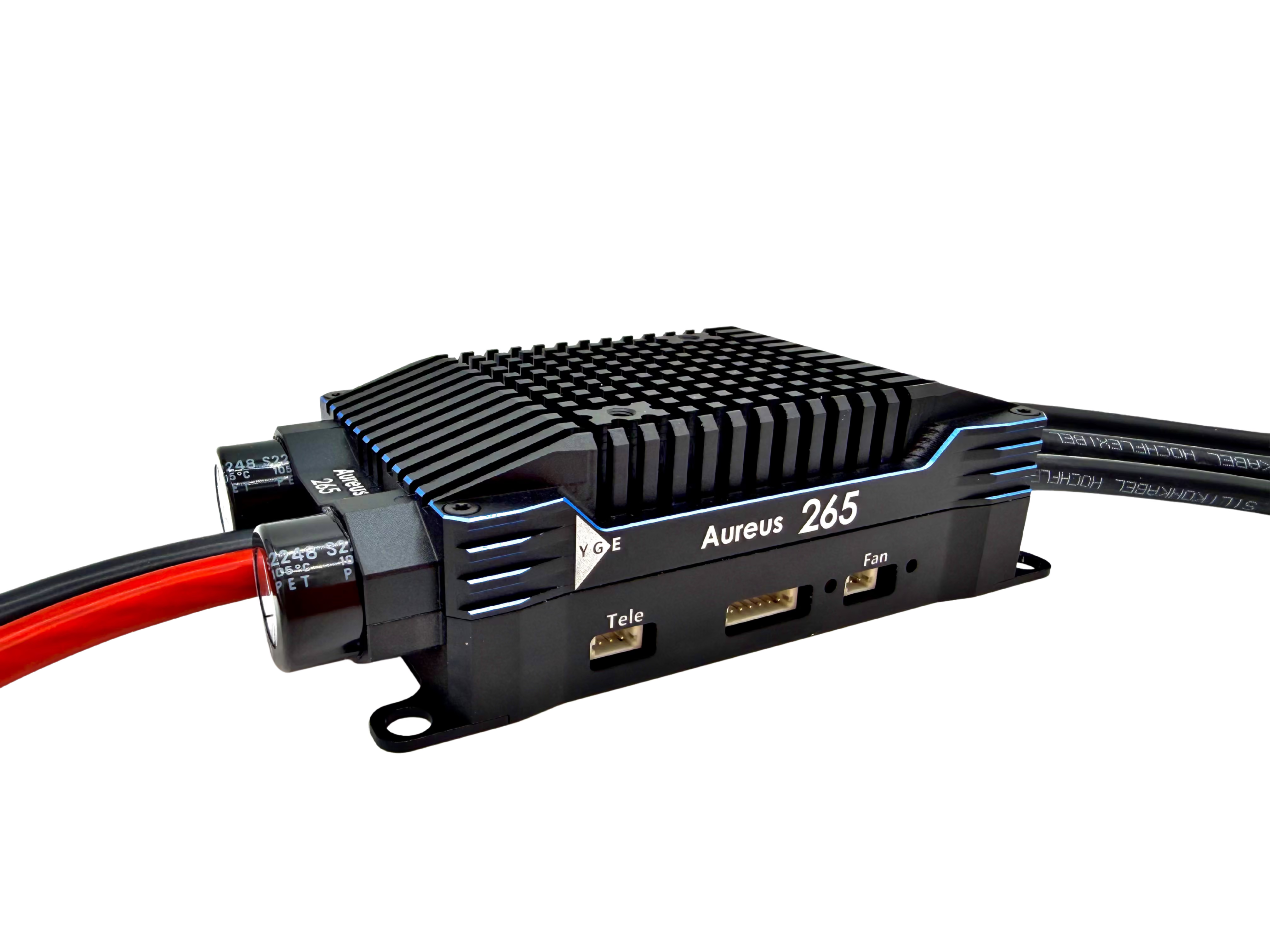
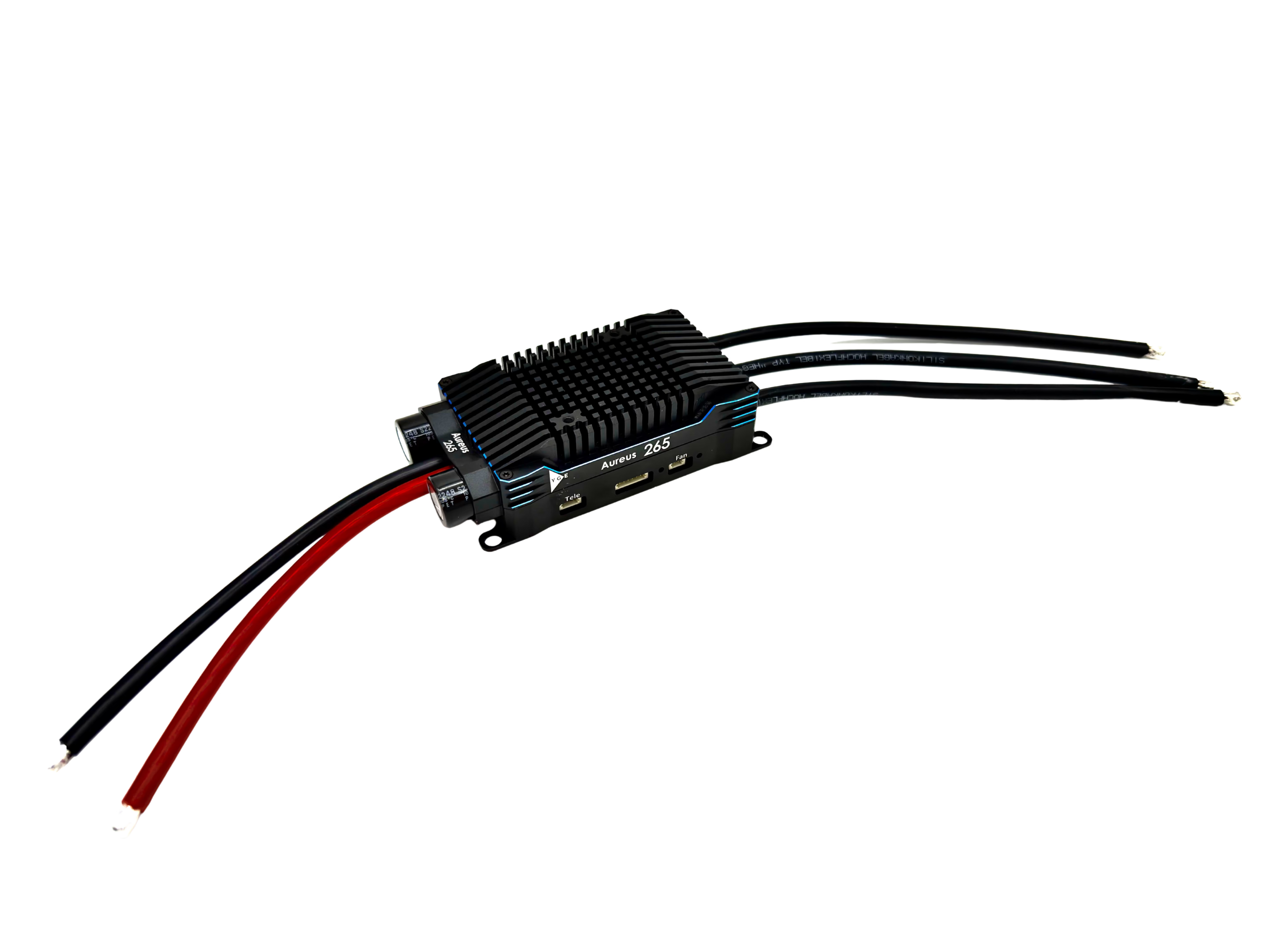
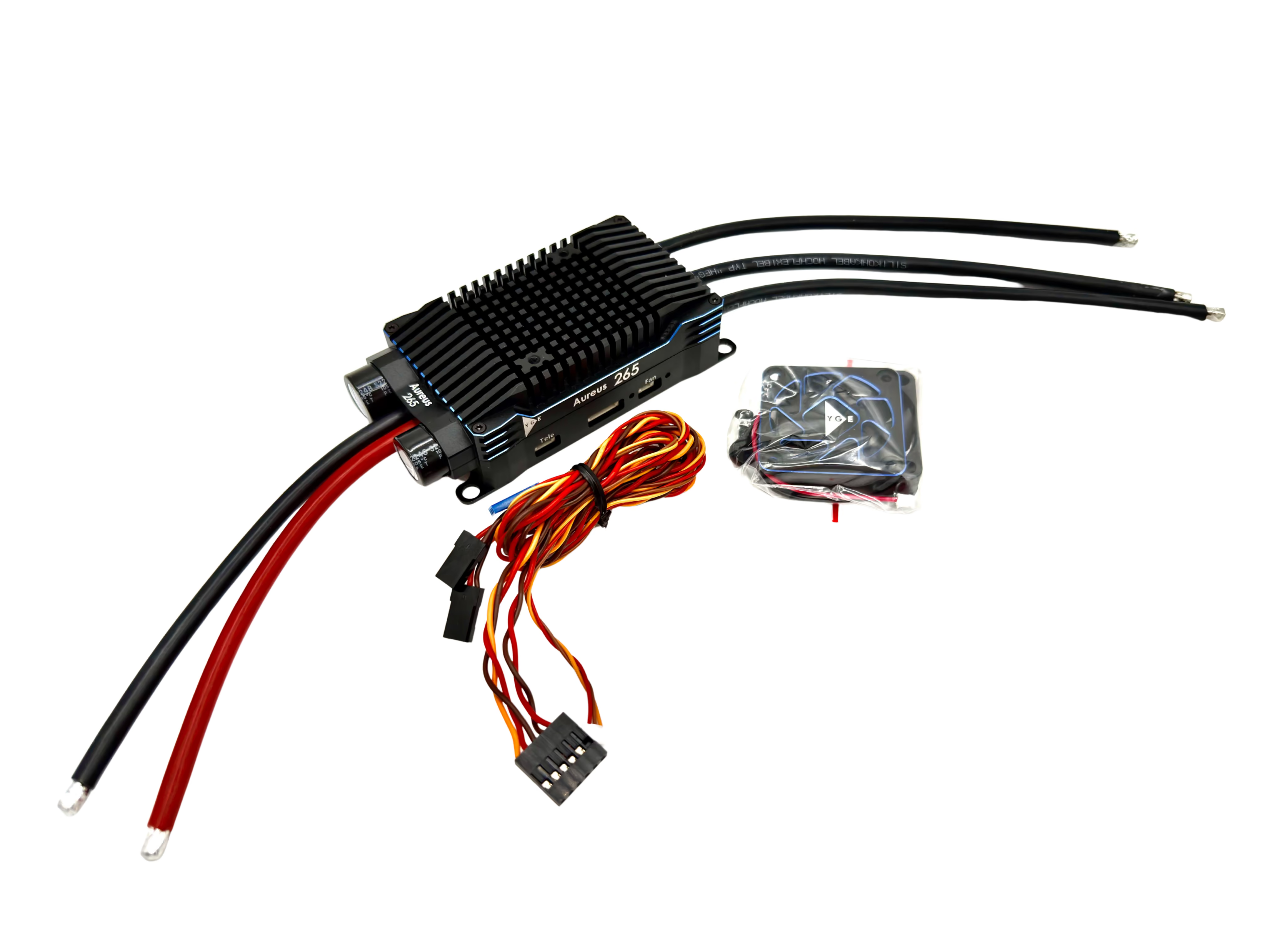
Aureus 265
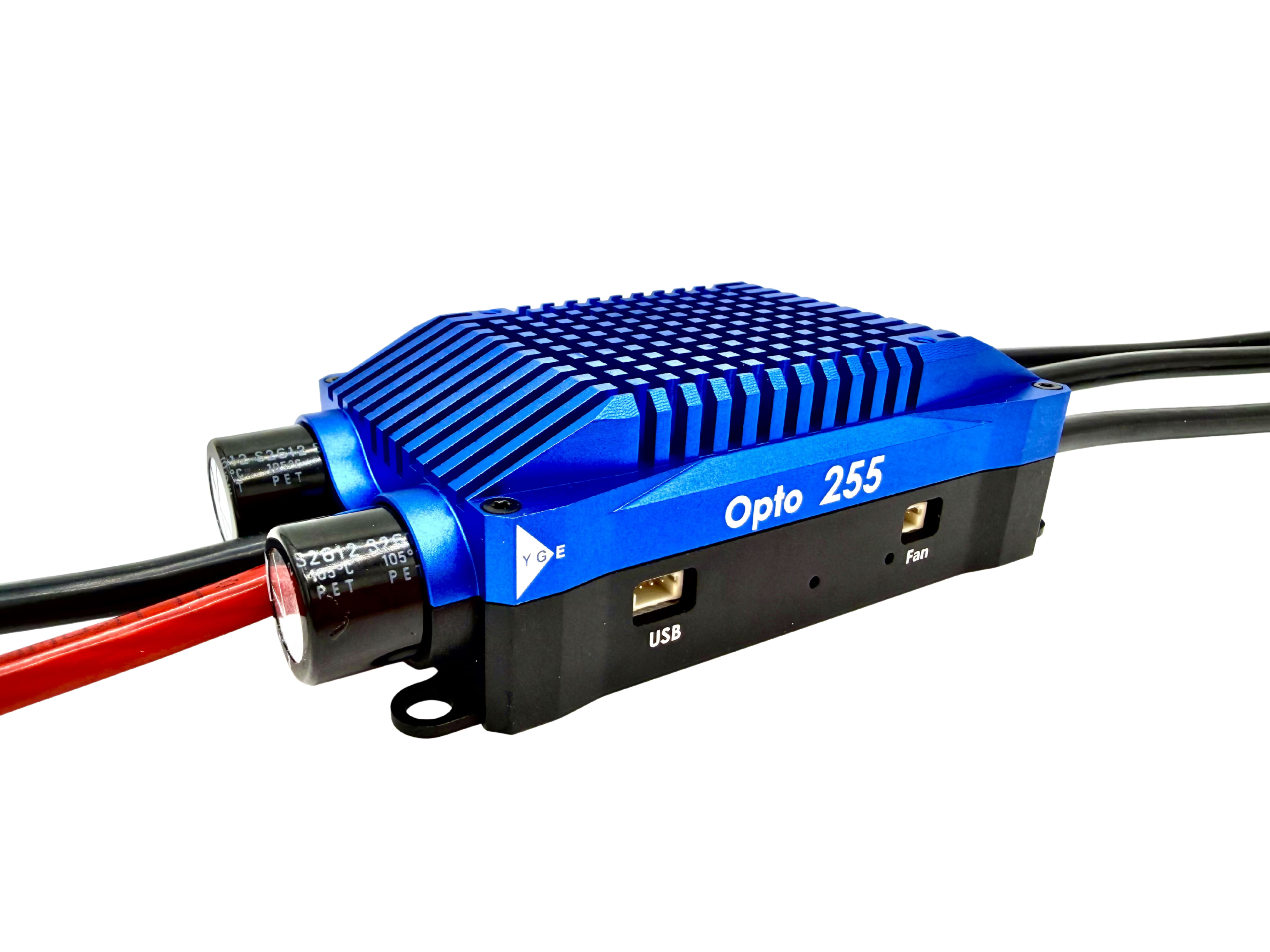
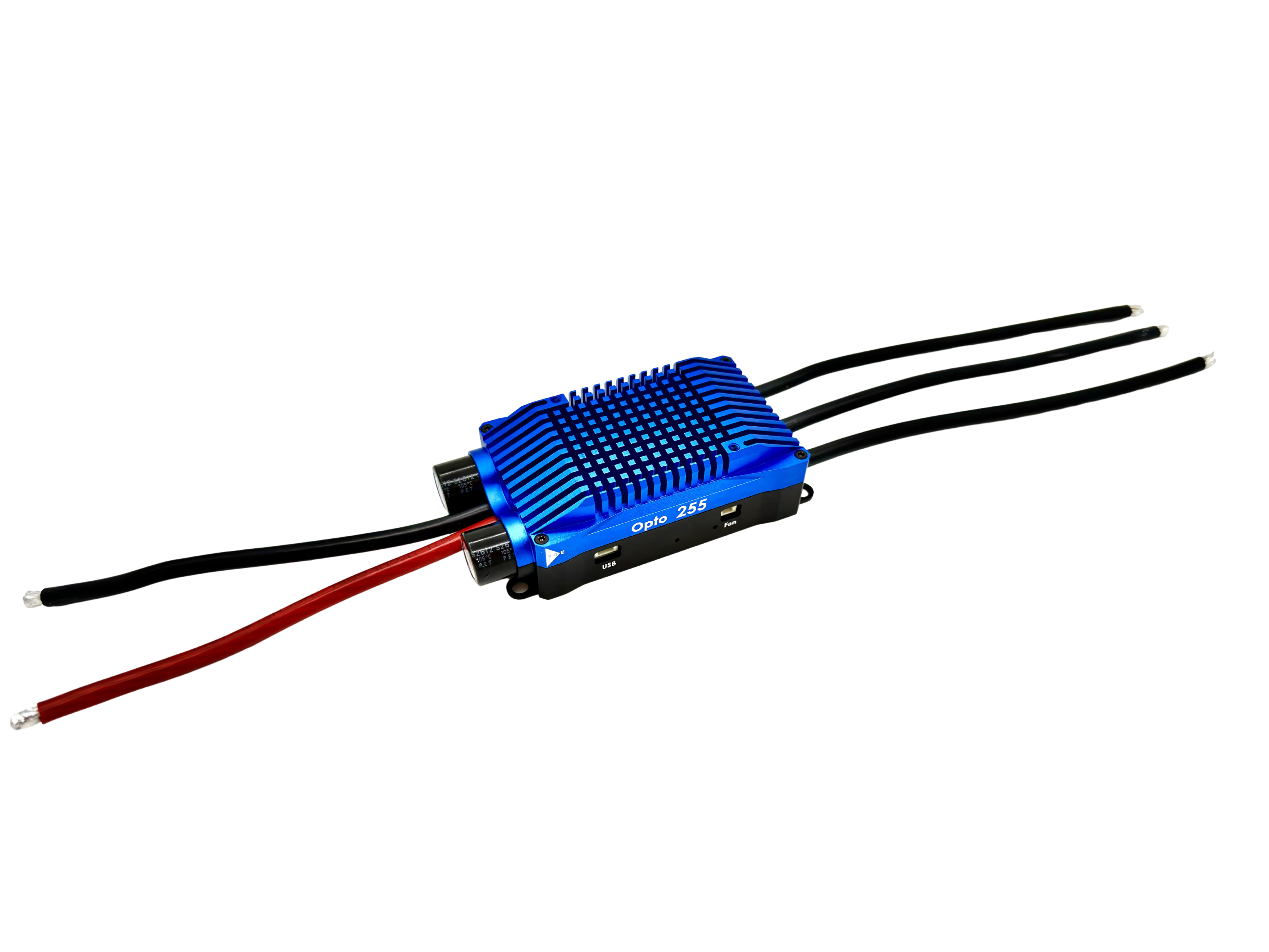
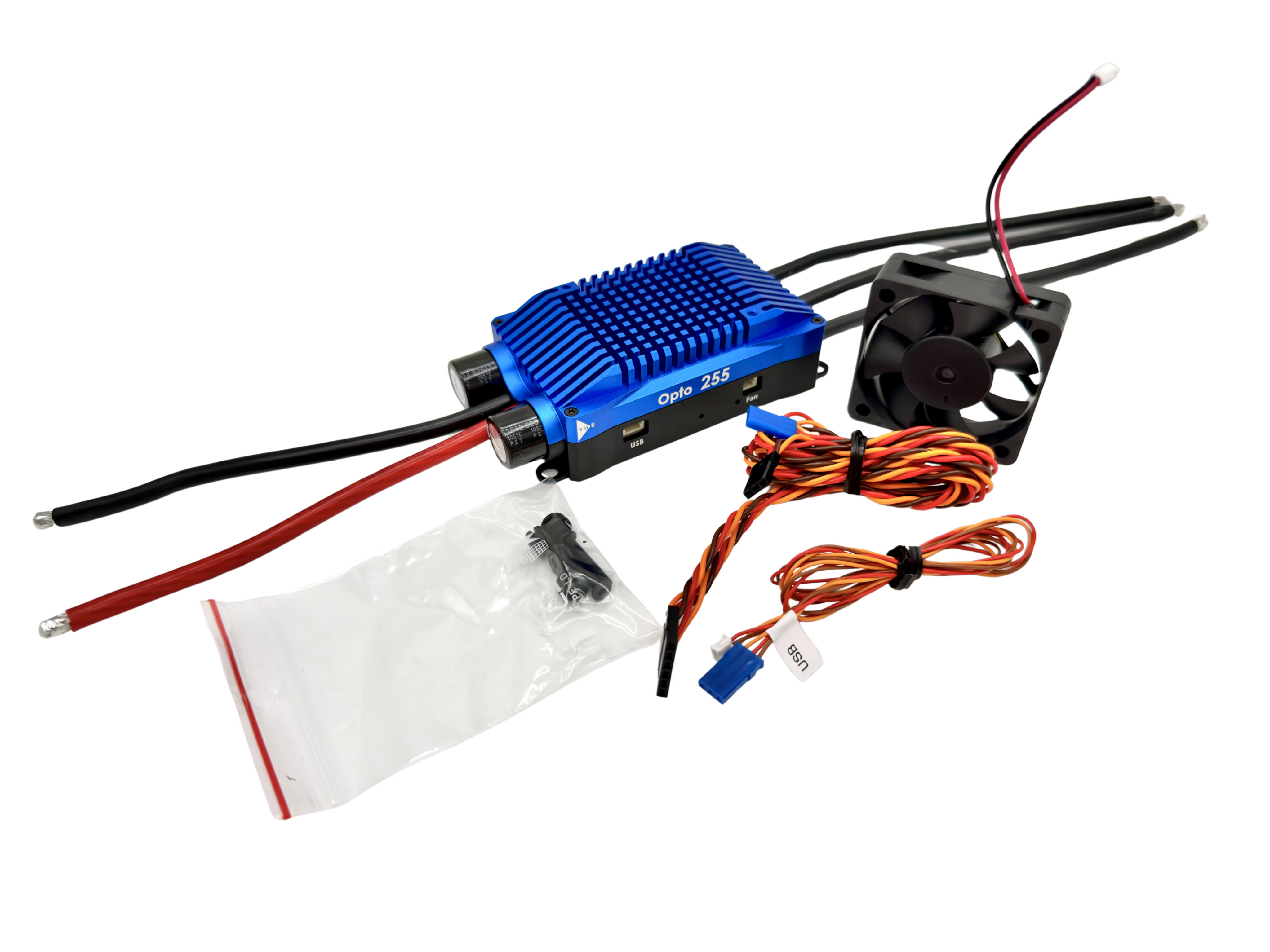
Opto 255
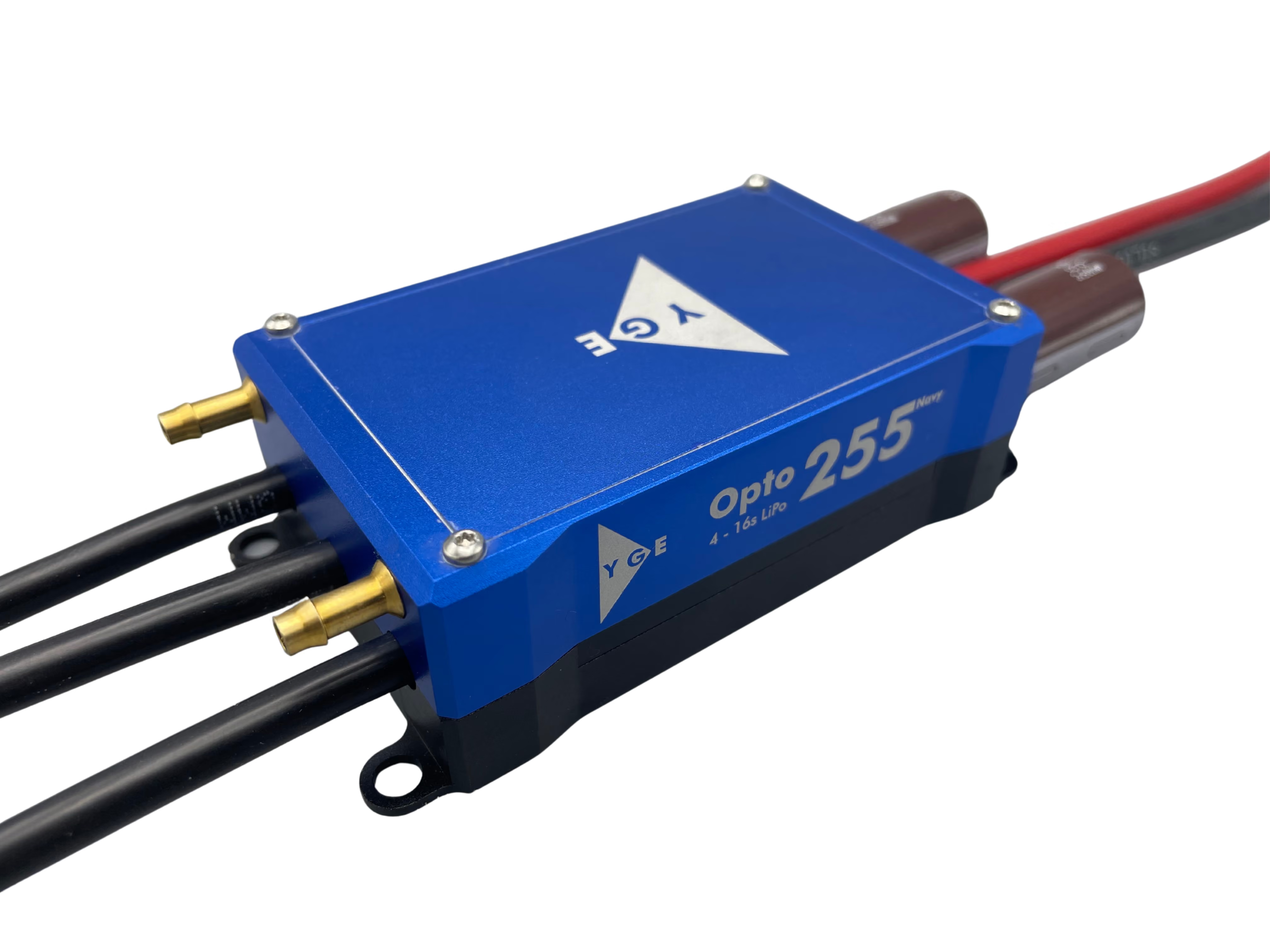
Opto 255 Navy
The current ratings refer to full throttle current with good cooling.* From 15s LiPo batteries onwards, fully insulated, touch-proof connectors must be used.
Looking for the right controller or a technical project partner?





Media Sources
https://www.svgrepo.com/svg/448112/repair-costs
https://www.svgrepo.com/svg/499593/computer
Contact:
https://www.svgrepo.com/svg/502648/email
Note on AI-Generated Content:
This website may use images and other content that have been created or edited using artificial intelligence (AI). AI-generated content may be used, in particular, to depict products, product variants, or illustrative scenarios.